
Awesome reference

PDF from 25-Jul-2014 https://www.ptotoday.com/filesharing/document/1786-roberts-rules-tip-sheet


8 Things Teachers Can Do To Improve Their Bedside Manner:
1. Talk like a human being.
Schools should communicate to people like they’re people, not co-managers of the walking knowledge vessels that will eventually reflect the failures and success of the school in a future pie chart.
Education serves people, not the other way around. Our teaching and learning systems exist to, among other things, create literate citizens that can live well. In that way, the terms of communication between schools and communities should be grounded in human compassion, language, and tone.
Just as even a brilliant doctor can struggle with their bedside manners, our teachers, administrators, and superintendents suffer from the education-equivalent as well.
...
If it doesn’t sound like a caring human being speaking on equal and non-patronizing terms to another caring human being, don’t send it.
2. Communicate with, not to.
...This is affected by…
1. What’s being discussed (topics that can benefit from dialogue, not already-made decisions)
2. How it’s being discussed (debate, conversation, collaborative, board vs crowded room with one microphone, over chili and bad punch, etc.)
3. Where it’s being discussed (in-person, the phone, ... conferences, etc.)
4. Why it’s being discussed (to problem-solve, to brainstorm, to clarify, to iterate, to revisit, etc.)
If it doesn’t sound like a caring human being speaking on equal and non-patronizing terms to another caring human being in a way that benefits from or allows for a useful response, don’t send it.
3. Have a point and make it actionable.
Not all communication will fit this characteristic, but in large part, communication ... should have a purpose that leads to something outside of the heads it’s being communicated between.
Put another way, that message should change something, and since communities are why schools exist, it makes sense that families (even if they are non-responsive and don’t show up and never write back and don’t understand, etc.) should often act in response to any ‘communication.’ Turning back to business language, if every message has a specific call-to-action, then it follows that every message would lead to something changing.
Have a budget issue to communicate to local businesses? Ask them to provide a tip or resource via Google Forms.
Have a new program to introduce? Ask [supporters] to attend a meeting–or even a simple webinar–on what the program is and what you hope it accomplishes for them.
Audited by the state and want to get out ahead of any confusion about the results? Create a visual with the data and your response, then start a conversation around the plan that can lead to community-wide support in the forms of donations, committee formations, voting, work with students through project-based learning, and more.
If it doesn’t sound like a caring human being speaking on equal and non-patronizing terms to another caring human being in a way that benefits from or allows for a useful response or action on the part of the reader, don’t send it.
4. Be consistent.
In both frequency and message, help [supporters] understand what to expect from you and when and how to expect it–and how they can help.
Consistency is the difference between forming a message or forming a relationship.
5. Try to tie the purpose of the message to the purpose of the school.
Don’t send a newsletter home about paving the school parking lot or asking for door prizes for a school dance if they haven’t heard the first word about the learning and well-being of [students] all year.
6. Make it about [the student].
...
When communicating with [supporters], not every message will directly affect [the student], but try to map out how it could affect them–or even all students at large.
In a perfect world, every message would be different for every reader, referencing the student, their history, how this communication affects them, and what they should do based on their specific circumstances. Of course, that’s not possible, but the more personalized the message is, the more precise and effective that message is.
7. Make sure they can read it.
Every wonder how pharmacies can read the scribble of a doctor?
This is closely related to the ‘personalized’ characteristic above. Whether that means form and platform (e.g., a letter versus a tweet versus a blog post versus a phone call, etc.), the native language of the reader, reading level, or some other facet, the accessibility of a message is obviously critical.
And as much as possible, it should be timely. The right information at the right time through the right platform. It’s difficult to be accessible, actionable, or personalized if it’s not timely.
8. Embrace the contradictions
Good teaching requires an educator to be many things at once, and sometimes they can contradict one another: Compassionate and clinical, authentic and professional, consistent and kind. These are a few of the many ‘soft skills’ of teaching, and may be the most impactful in regards to creating an approachable ‘bedside manner’ for teachers.
Sometimes these characteristics may seem at odds. The point is, it’s possible to be a clinical and compassionate, authentic and ‘professional,’ compassionate and empathetic and kind. In fact, the most successful professionals are often the ones best able to pull this off.
Reference
Staff. (n.d.) . 8 Things Teachers Can Do To Improve Their Bedside Manner: Improving How Schools Relate to Communities. TeachThought. https://www.teachthought.com/pedagogy/8-things-teachers-can-do-to-improve-their-bedside-manner/
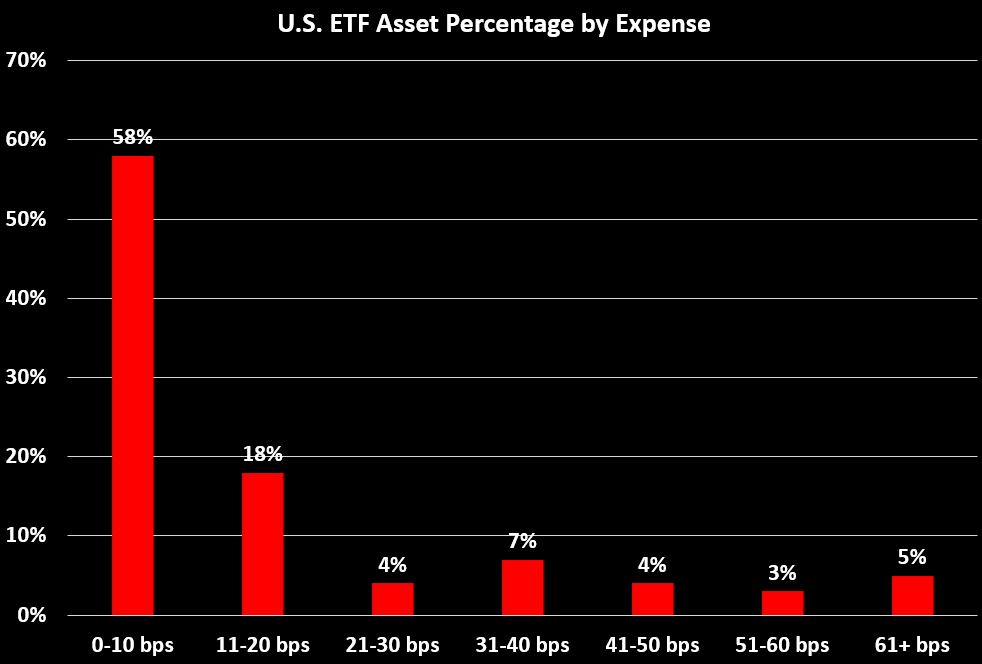
Reference
Capul, J. (2022 February 15). Chart Talk: ETF assets congregate towards cheaper funds. Seeking Alpha. https://seekingalpha.com/news/3800488-chart-talk-etf-assets-congregate-towards-cheaper-funds
 (Ye, 2019)
This discussion proposes that various levels of management can be differentiated by the roles described by Buckingham (2005), adhering to the ideals of Managing and Leading Operations (MALO) in Operations Management (OPMA). Overall, Buckingham's article is awesome!
Average Managers Expect Everyone To Work The Same Way, Like Stormtroopers
I tend to agree with the three analogy roles as described by Buckingham (2005), as they adequately differentiate the roles of average managers, great managers, and leaders in MALO. Regarding the ‘checkers’ analogy and average managers, it behooves all managers to outwardly treat all employees as equal, especially when directing group communications, meetings, and discussions of compensation. Quinn (2010) recognizes that managers must balance Informational, Interpersonal, and Decisional roles; in a way, I feel that it is tactically beneficial for all managers to outwardly appear as though they are ‘average managers,’ if only to convey the sense of fairness amongst their employees, especially in Mintzberg’s roles of: Disseminator, Spokesperson, Leader, Disturbance Handler, Resource Allocator, and Negotiator. Like Buckingham (2005) describes, my experience with average managers (especially those working in unionized environments) has seen little change for employees, as everyone is expected to do what they are expected to do, with very little accommodation for individual differences.
Great Managers Assemble Rag Tag Crews, Like A Rebel Alliance
In contrast, great managers may be analogous to chess players, exhibiting strengths in managing by knowing the strengths and weaknesses of each employee (or ‘chess piece’); as described by Buckingham (2005), great managers must know each employee intimately, including how to overcome weaknesses, ‘trigger’ each employee to perform well, and teach toward each employee’s preferred learning styles in order to ‘release’ the employee based on strengths. Being a great manager requires sufficient time and effort to analyze, assess, and get to know each employee, and may be easier to do with smaller groups of employees to manage, or with managers that have resources (perhaps more education and experience?) available for them to become great. Personally, I have known only a few great managers, and they have always been instrumental in ‘changing the game’ to accommodate employees, to the benefit of the organization; at the same time, employees are often reluctant to change, so a large part of a great manager’s job is to negotiate and renegotiate how people work at organizations, and change the organization itself.
Leaders Are Attuned With The Forces Of The Universe
Most leaders that I have worked with (especially in implementing Enterprise Resource Management systems) are typically concerned with the Leading and Conceptual notions of being able to see the ‘big picture’ in every facet of an organization; likewise, they must inspire their managers and employees to also see that ‘big picture’ and be motivated to achieve it over the middle- and long- term, as Buckingham (2005) describes. Good leaders possess sufficient knowledge of the Technical and Human aspects of their organization in order to motivate managers and employees, requiring the ability to quickly switch between Leading, Planning, Organizing, and Controlling (Quinn, 2010) in the face of myriad problems, ideas, and solutions.
Project Managers Are Like Jedi Masters
In my experience, I feel that project managers (PMs) must act as a hybrid combination of all the best qualities of employees, managers, and leaders, with additional skills in PM, per se. I would describe PMs as ‘chess grandmasters’ or ‘jacks-of-all-trades,’ who are good employees, great managers, and excellent leaders with enough political savvy and resourcefulness to rally everyone together for a project in the face of organizational change. (Good PMs are great at managing change, and have likely had experience working as star employees, great managers, or leaders.)
If projects have been developed and approved (as part of the allowable project portfolio structure within an organization, as described by James in 2011) to implement change, every team member’s opinions are equally important; I believe that PMs tend to treat all team members, including themselves, as equals (or perhaps like checkers pieces), in that all ideas are relevant. For the duration of a project, I envision that project team members are expected to act like managers and employees, abiding by a curious mix of bureaucratic and team structures, as depicted in the Calm Seas case (Quinn, 2010); there would be a mix of team members doing what they’re supposed to do (‘checkers’ pieces), along with dynamic ‘chess’ pieces doing what they are strong at doing, and a mix of average managers, great managers, and leaders, all coordinated by a humble project manager. I’ve observed from my work and volunteer projects that the best PMs divide their efforts between: rallying people toward project completion, knowing which people to assign to what kinds of work, and ensuring that people are able to complete their assigned work (or stepping-in to take over incomplete work).
PMs Are Different Than Other Managers & Leaders
As James (2011) describes, projects are unique one-time efforts, initiated from various departments in an organization; thus, a PM must be able to quickly familiarize themselves with the relevant stakeholders from that department and the department’s goals, while being able to negotiate (often politically) for capacity (people’s time) to take away from their regular work to invest in temporary project work. Project managers are different from project team members in their authority to make decisions, financial / resource allocations, and Execution: Estimate, Planning, and Control Activities (James, 2011).
James (2011) recommends that PMs often use a top-down formal strategy, like Project Evaluation and Review Technique, of allotting the right managers and people to a project, including the selection of people using Project, Functional, or Matrix structures. To add control to projects, it is recommended for PMs to formally Scope a project to avoid Scope Creep (What Is, n.d.) as much as possible, which ought to keep the project life cycle shorter (perhaps based on Network Analysis), thereby respecting budgetary limits.
In practice, however, the allotment of people, scope, and budgets can be uncontrollable due to the uncharted nature of projects, and projects may often be staffed by motley crew of ‘whoever we are able to get!’ involved. Overall, anyone working as a PM should be prepared for a myriad of problems, creative solutions, and wide assortment of activities under their purview.
Going Forward
Project managers ought to be people that are good at rallying others (leaders) to achieve a limited-time objective, while utilizing what each person can do (great management), and ensuring they do it (average management). All leaders, managers, and project managers must possess the authority to Plan, Lead, Organize, and Control (Quinn, 2010), while having the flexibility to switch to other roles as needed. MALO roles, including Conceptual, Technical, and Human (Quinn, 2010), may be more predominant in the varying types of managers / leaders, necessary for fully functional OPMA across all members of an organization, including project managers and project team members. Utilizing our MALO and OPMA knowledge, especially with good training / education, we can all be better employees, project managers, managers, and leaders.
I have met many brilliant managers, leaders, and project managers that have had informal education in these areas. I feel that enthusiasm, passion, and a positive attitude can tackle almost any challenge! Having a more formal university education can open many more opportunities because we have a recognized and robust set of tools for exploring the world.
References
Buckingham, M. (2005) What great managers do. Harvard Business Review. https://hbr.org/2005/03/what-great-managers-do
James, T. (2011). Operations Strategy. Bookboon. https://bookboon.com/en/operations-strategy-ebook
Quinn, S. (2010). Management Basics. Bookboon.com. https://bookboon.com/en/management-basics-ebook
What Is Scope Creep in Project Management? (n.d.). Wrike Project Management Guide. https://www.wrike.com/project-management-guide/faq/what-is-scope-creep-in-project-management/
Ye, J. (2019). Auto battlers started with Dota Auto Chess and now Valve and Riot Games are joining in. [Online image]. South China Morning Post. https://cdn.i-scmp.com/sites/default/files/d8/images/person/2019/07/09/image4.gif

/https://public-media.si-cdn.com/filer/59/94/599497ae-18c8-4aee-a703-a921f73d8457/singularity.jpg)
| The investment seeks to provide investment results that track the performance of the Nasdaq Victory US Large Cap High Dividend 100 Long/Cash Volatility Weighted Index before fees and expenses. The fund seeks to achieve its investment objective by investing, under normal market conditions, at least 80% of its assets directly or indirectly in the securities included in the Nasdaq Victory US Large Cap 100 High Dividend Long/Cash Volatility Weighted Index. The index identifies the 100 highest dividend yielding stocks in the Nasdaq Victory US Large Cap 500 Volatility Weighted Index. |


