

Let's examine the Mission Statements of both Amazon and WalMart, using marketing management ideas - specifically insights on strategies, goals, technology, sourcing, and orientation.
Amazon is Market-Oriented
The world’s fourth largest marketing platform is currently Amazon.com (Markman, 2017). Their Mission Statement is
“To be Earth’s most customer-centric company, where customers can find and discover anything they might want to buy online, and endeavors to offer its customers the lowest possible prices,”
which clearly outlines their valuable purpose for customers and a forward-looking strategy to achieve a goal of low pricing.
Amazon is likely market-oriented, rather than product-, production-, or futuristically oriented. Product-orientation implies that Amazon mainly creates products itself, which it does not (Business Case Studies, 2019). Mainly, Amazon offers a multitude of products for sale, sourced through a multitude of vendors; there are a relatively small quantity of products made by Amazon itself (Amazon Branded), sold as substitutes for other vendors’ products, when their inventories are empty, fake, or problematic (Edelman, 2019).
Amazon Branded products are usually at a higher price than other vendors that sell through Amazon, so Amazon is unlikely to be production-oriented (Quain, 2018). Likewise, despite the inclusion of the forward-looking words “...endeavors to offer…” in their Mission Statement, Amazon’s mission statement is not futuristic, since it accurately describes Amazon today.As implied in Amazon’s Mission Statement, Amazon is strongly market-oriented to “...be Earth’s most customer-centric company...discover anything they might want [at] the lowest possible prices.” Amazon organizes its activities, products, and services around its customers wants and needs (Business Case Studies, 2019), with over 600 million products (Johnson, 2018).

Opinion: Update the Real Canadian Superstore and WalMart’s Mission Statement to Compete with Amazon
WalMart’s Mission Statement has been reviewed and updated over the years; previously, it was “We deliver low prices, every day;” currently, WalMart’s Mission Statement is “to save people money so they can live better.” Because of internal and external factors relevant to marketing, NOW may be the best time to review and update the Mission Statement for both the Real Canadian Superstore and WalMart, based on consumer experiences.
From our shopping experiences, most people buy almost exactly the same products from a local retail location, every week. Neither the Real Canadian Superstore nor WalMart have done much capitalize on consumer shopping habits, other than keeping it’s doors open late into the night.
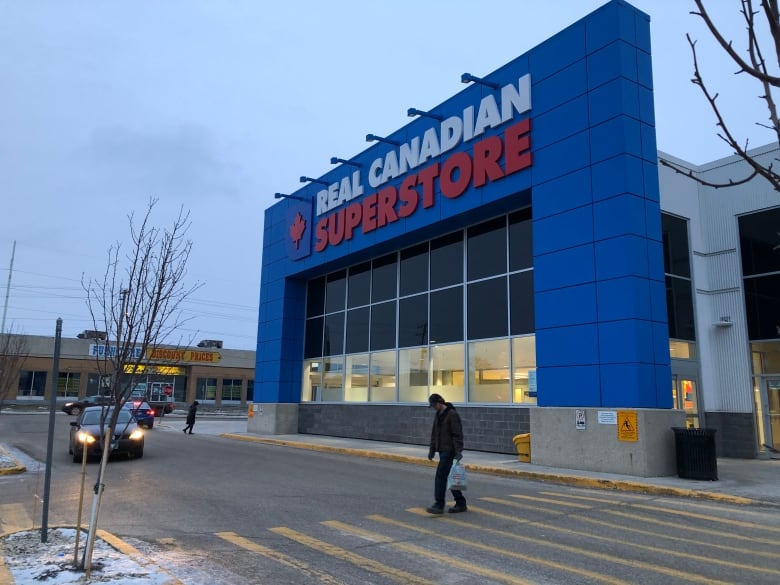
Both the Real Canadian Superstore and WalMart have sufficient internal qualities to rival that of Amazon, such that these retailers can take advantage of external qualities, given today’s popularity of one-to-one marketing. WalMart’s goal of “saving money” is a good one, but needs to be updated similar to what they had used previously as a Mission Statement. Perhaps something along the lines of
“We deliver what you need to live better, every day at low prices!”
Mostly Strengths and Few Weaknesses
Internally, both the Real Canadian Superstore and WalMart already have the technology and processes to surpass Amazon:
online ordering, telephone ordering, delivery to homes, and pick-up from any of their local retail locations; if consumers can't wait for a scheduled delivery, they can simply walk-in and buy from any of their locations.
WalMart ought to utilize their advantage of the worldwide ‘big data’ that they have, and push buying recommendations to consumers, so that we can have our usual purchases delivered regularly; likewise, the Real Canadian Superstore can do the same, within Canada.
They can both offer supplemental products that consumers might not know they wanted, but do want... like Amazon does (Wills, 2018). Though the Real Canadian Superstore and WalMart have lower profit margins than other vendors, this can be overcome by increasing sales volume through 'recommendations' mitigated by their 'big data.'
Opportunities and Threats
With the popularity of home delivery services, retailers can capitalize on a few aspects: products can be marketed and delivered to remote locations; more hiring can be done to expedite analytics and deliveries; and overall product quality can improve by more accurately eliminating under-performing products, while pushing recommended products (Smithson, 2019).
Unfortunately, because consumers and retailers have already realized that the next Amazon may be 'around the corner,' other retailers have started heavy competitions in the retail/big data/delivery space, according to Investopedia (Segal, 2020).
Summary
Both the Real Canadian Superstore and WalMart need to proactively push regular home deliveries / pick-up of products that consumers buy habitually, capitalizing on it's 'big data' to “deliver what we need to live better, every week, at low prices,” as soon as possible to win against Amazon. Updating its Mission Statement would be a first step to increase its sales volume, profitability, and regularly satisfy its loyal base of customers.
References
Markman, J. (2017). The Amazon Era: No Profits, No Problem. Forbes. Retrieved from https://www.forbes.com/sites/jonmarkman/2017/05/23/the-amazon-era-no-profits-no-problem/#251a7eed437a
Business Case Studies, (2019). Market-and-product-orientation. Retrieved from https://businesscasestudies.co.u/market-and-product-orientation/Edelman, G. (2019). Amazon Doesn’t Favor Its Own Brands—Except When It Does. Wired. Retrieved from https://www.wired.com/story/amazon-gating-private-labels-antitrust/
Segal, T. (2020). Who Are Amazon's (AMZN) Main Competitors? Company Profiles. Retrieved from https://www.investopedia.com/ask/answers/120314/who-are-amazons-amzn-main-competitors.asp
Smithson, N. (2019). Walmart SWOT Analysis & Recommendations. Panmore Institute. Retrieved from http://panmore.com/walmart-swot-analysis-recommendations-case-study
Wills, J. (2018). 7 Ways Amazon Uses Big Data to Stalk You (AMZN). Cybersecurity. Retrieved from https://www.investopedia.com/articles/insights/090716/7-ways-amazon-uses-big-data-stalk-you-amzn.asp
Quain, S. (2018). Difference Between Product Orientation and Production Orientation. Houston Chronicle. Retrieved from https://smallbusiness.chron.com/difference-between-product-orientation-production-orientation-16004.html


No comments:
Post a Comment
Thank you for adding your brilliant ideas!