your originating ip address

Tuesday

Handwritten notes, mind-maps, & bullet journals...

Some ideas if you prefer the ease of handwriting notes, mind-mapping, or bullet journaling:

Taking Notes by Hand--Advantages
  • You can pay attention to what's happening in the meeting rather than focusing on typing. 
  • You can easily draw arrows, cross out words, and underline information without having to look for the right key. You can use your own method of notation or shorthand. 
  • It's faster to write if you are a slow typist. 
  • You can easily write notes on the meeting handouts. 
  • There's less temptation to record every word. 
  • There's no worry about what might go wrong with the computer.  
  • It's quieter and less distracting to other people in the room. 

Taking Notes by Hand--Disadvantages
  • You may not be able to read your handwriting. 
  • You may not be able to keep up if you write slowly. 
  • Your writing hand can get tired if it's a long meeting.
  • It's a longer two-step process of writing, then typing. 
  • You may misplace your written notes and lose everything. 

For more information, check out Lynn's recommendations at Syntax Training


thanks from ifranks

Thursday

Youtube's TikTok competitor 🎬, Zoom 0-Day 🐛, coronavirus vaccine trials 💉

TikTok has changed the video entertainment scene and now YouTube is looking to compete directly with it by launching its own version called 'Shorts'.  
Building scalable web scrapers has never been easier. Scraper API handles proxies, browsers, and CAPTCHAs for you, so you can get the HTML from any web page with an API call. Instantly turn any website into an API!
If you would like to sponsor TLDR, please let me know by replying to this email!
Big Tech & Startups
Stories about tech giants, startups, and venture capital
YouTube reportedly working on TikTok competitor called Shorts (1 minute read)
TikTok has changed the video entertainment scene and now YouTube is looking to compete directly with it by launching its own version called 'Shorts'. Users will be able to upload brief videos into a feed inside the Shorts app and take advantage of the licensed music that YouTube Music has in its catalog. It is clear from TikTok's growth why YouTube now wants a piece of the action. YouTube has previously taken features from other social media platforms and integrated it into its own, for example, Instagram Stories. Facebook is currently testing its own version of TikTok in Brazil.
Ex-NSA hacker drops new zero-day doom for Zoom (2 minute read)
Zoom's popularity has recently rocketed and this has led to an increased focus on the company's security and privacy practices. Three bugs have been discovered, one that can be abused to steal Windows passwords, and another two that can be abused to take over a Zoom user's Mac, including tapping into the webcam and microphone. One of the Mac bugs allows a user with low-level privileges to inject the Zoom installer with malicious code to obtain root access. The other bug tricks Zoom into giving an attacker the same access to the webcam and microphone that Zoom already has without notifying the user. Zoom has not yet fixed the Mac vulnerabilities.

Science & Cutting Edge Technology
Stories about scientific breakthroughs and futuristic technologies like AI, blockchain, and space travel
SpaceX's Starship user guide details how it could replace the Space Shuttle and offer comfy passenger flights (3 minute read)
The first version of SpaceX's Starship spacecraft user manual has been released. It is not as detailed as SpaceX's manuals for other spacecraft but it provides insight into how the Starship will be used. Starship will be able to transport plenty of cargo into space and can be configured to support as many as 100 people. SpaceX will be launching Starships from both the Kennedy Space Center in Florida and Boca Chica in Texas.
A neural network can help spot Covid-19 in chest x-rays (1 minute read)
COVID-Net is a convolutional neural network that is trained to identify signs of COVID-19 in chest x-rays. It is being released as an incomplete solution and the firm that created the system is encouraging others to help make it complete. Other research teams have announced AI tools that can diagnose COVID-19 from x-rays, but none of these tools have been made fully available to the public. While COVID-Net as yet to prove itself, public releases have historically proven to be effective methods of improving software.

Programming, Design & Data Science
Tools, open source, and other resources for programmers, designers, and data scientists
tsParticles (GitHub Repo)
tsParticles is a lightweight TypeScript library for creating particles. It is almost completely dependency-free (it requires pathseg for the Polygon Mask feature and Icon Fonts must be included in the page). It is fully compatible with the particles.js configuration - you only need to change the script source to convert it to tsParticles. tsParticles supports custom shapes and presets.
Theia (GitHub Repo)
Theia is an extensible platform for developing full-fledged multi-language Cloud & Desktop IDE-like products with state-of-the-art web technologies. It provides a highly flexible architecture and supports VS Code Extension protocol. Guide and examples of common scenarios are provided.

Miscellaneous
Random stuff techies might be interested in
Why I am volunteering to get the coronavirus vaccine (7 minute read)
45 people in Seattle will soon get an experimental COVID-19 vaccine. Several vaccines are in development, but the first to be tested is a novel type of shot developed by Moderna Therapeutics. Study participants signed a 20-page consent form which acknowledges that the vaccine might not be effective and that they agree to the experimental conditions. There are risks such as anaphylactic shock and antibody-dependent enhancement. The vaccine delivers the genetic material required for the immune system to produce coronavirus antibodies. This type of vaccine has been in development for some time, and one in three patients in the past who have received it experienced severe pain that interfered with normal activity for the rest of the day. Volunteers are paid, and the study lasts for 14 months.
Campus is closed, so college students are rebuilding their schools in Minecraft (8 minute read)
University of Pennsylvania students recreated their campus in Minecraft after being told that their college commencement would be held online. Students report it being a rewarding experience to be able to recreate the campus they are graduating from, allowing them a chance to properly finish out their experience. Minecraft servers and creations are now being shared on Discord, Facebook, and Reddit. Minecraft has become a place where students can log in and process the sudden loss of an on-campus community. In May, there will be in-game graduations on a server specifically created to host Class of 2020 graduations for students from hundreds of different universities. At least 278 institutions have signed up so far.

A Few Intricacies of Marketing Online...

For organizations that sell products and services to more than one geographic region, online marketing can create a windfall of revenue. At the same time, there are several ideas that must be considered as part of an overall customer service strategy.
(Sherman, 2019)

CRM Companies ought to maintain information about each and every customer that chooses to interact with the company, limited by budgets. To wit, companies can take advantage of data and patterns from customers, through the tracking of digital customer payments (e.g. credit cards or loyalty programs), buying quantities for given time periods, and returns/complaints -- while respecting company warranties, customer privacy, and ethics. Making customers trackable in a CRM improves a company’s ability to recognize patterns in Attitudinal Loyalty, Behavioral Loyalty, and Satisfaction, which are helpful for reviewing / planning Marketing Strategies.


E-CRM Using customer “emails, websites, chat rooms, forums and other channels to achieve CRM objectives” (Techopedia, 2016) ought to be the norm for all companies’ E-CRM, Social CRM, and Retention/Loyalty systems. The prevalence of online systems, including product/service review websites, social media platforms, and content creation systems allows existing and potential customers to use Word-Of-Mouth more than ever! Customers may interact in an E-CRM style before, during, and after purchases, putting the onus on companies to track the myriad of relevant online systems that may be useful for E-CRM, and perhaps to design their own.


PROBLEMS
COMPLAINTS - According to ‘CRM at the Speed of Light’ (Greenberg, 2009), companies should be worried about bad reviews from verbal terrorists, in that “customer satisfaction scores could be less important to a firm’s success or failure than the number of complaints it gets.”
Greenberg (2009) states that “if a company can resolve a customer’s complaint well, then the customer’s attitude toward the company is improved, possibly even beyond the level of his or her original satisfaction,” which is a good thing for companies that are subject to complaints.

IDENTIFICATION - Companies sometimes are unable to create a holistic customer record, mostly due to the proliferation of multiple ‘accounts/identities’ online. For example, Justin Trudeau may be ‘Justin T' on Facebook, ‘Prime Minister’ on Twitter, and Trudeau@gmail.com on email. The task of linking all accounts to the same person is daunting, flying in the face of good CRM theology and defeating most forms of analytics. Companies may have a Community Manager resolve such conundrums, linking up each identity manually, or design a loyalty program with incentives to encourage people to enable such tracking of themselves.
CUSTOMER GAPS Marketing is usually positive, in that it promotes the benefits bestowed by products/services to customers. Unfortunately, when marketing is too positive, there may be a significant Gap “between customer expectations and customer perceptions,” from the company over-stating the benefits (EPM, 2018). However, if companies promote their products in an understated way, customers can be pleasantly surprised (Gap) by all of the many benefits that are unexpected.
For instance, a few years ago, I was pleasantly surprised (positive Customer Gap) that ‘Bed, Bath, and Beyond’ provided a lifetime return policy. Yay!
Recently, customers were saddened by the removal of their iron clad return policy (which is a negative Customer Gap).  SOLUTIONS As stated in Principles of Marketing (2010), a company’s best practice for achieving the Retention and Loyalty of all customers is to maintain the best possible CRM, E-CRM, and Social CRM possible, “perform[ing] at or beyond customer expectations so fewer complaints will be received in the first place.” All feedback can be collected from Customer Records, E-CRM, and Social CRM interactions, for the purposes of product/service improvements.
Several companies (Cooper, 2018) have been praised as good examples for gaining positive rankings by using CRM tracking, E-CRM, and Social CRM to respond to any less-than-positive communications about their product / service. The following re-framed messaging is paraphrased from Greenburg (2009):

Customer: ‘The chocolate is missing from my chocolate chip cookie?!’
Company: ‘This is extremely rare! You should celebrate your good luck in finding such a rarity!’


SUMMARY Companies need to have a CRM system for tracking customers that are happy with their products/services, and more importantly, customers that are dissatisfied; if complaints are handled well, perhaps with humor, customers may have a higher satisfaction rating of the company. Concordantly, E-CRM and Social CRM are useful for companies to track customers across online media; unfortunately, effective tracking may require a manager dedicated to discerning customers across a myriad of possible usernames and identities. Products / services ought to be promoted in an understated way, such that customers are pleasantly surprised (positive Gap) by how much more value they receive than anticipated.


REFERENCES
EPM. (2018, March). Gap Model of Service Quality. Expert Program Management. Retrieved from https://expertprogrammanagement.com/2018/03/gap-model-service-quality/
Greenberg, P. (2009, December 9). CRM at the Speed of Light, Fourth Edition: Social CRM 2.0 Strategies, Tools, and Techniques for Engaging Your Customers.
Hart, Stefan & Kassem, Gamal. (2012). Social Customer Relationship Management – From Customer To Friend.
Principles of Marketing. (2010). Retrieved from https://open.lib.umn.edu/principlesmarketing/part/chapter-15-price-the-only-revenue-generator/
Sherman. (2019, September 27). [Online Image.] Online Marketing 101: The First Steps to Becoming an Expert. LYFE Marketing. Retrieved from https://www.lyfemarketing.com/blog/online-marketing-101/
Techopedia. (2016, December 28). Electronic Customer Relationship Management (E-CRM). Techopedia. Retrieved from https://www.techopedia.com/definition/30914/electronic-customer-relationship-management-e-crm


thanks from ifranks

Saturday

The Next Amazon is Next Door...


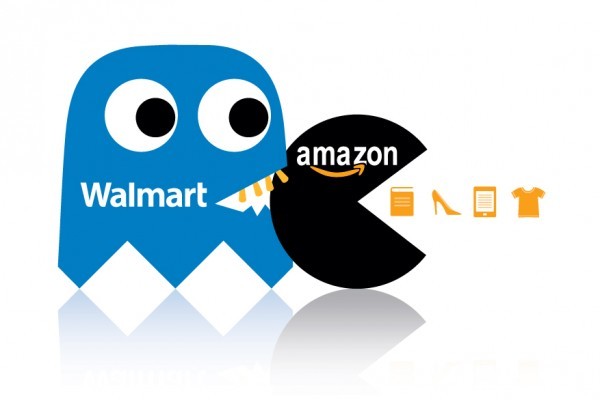
Let's examine the Mission Statements of both Amazon and WalMart, using marketing management ideas - specifically insights on strategies, goals, technology, sourcing, and orientation.

Amazon is Market-Oriented
The world’s fourth largest marketing platform is currently Amazon.com (Markman, 2017). Their Mission Statement is
“To be Earth’s most customer-centric company, where customers can find and discover anything they might want to buy online, and endeavors to offer its customers the lowest possible prices,”
which clearly outlines their valuable purpose for customers and a forward-looking strategy to achieve a goal of low pricing.
Amazon is likely market-oriented, rather than product-, production-, or futuristically oriented.  Product-orientation implies that Amazon mainly creates products itself, which it does not (Business Case Studies, 2019).  Mainly, Amazon offers a multitude of products for sale, sourced through a multitude of vendors; there are a relatively small quantity of products made by Amazon itself (Amazon Branded), sold as substitutes for other vendors’ products, when their inventories are empty, fake, or problematic (Edelman, 2019).
Amazon Branded products are usually at a higher price than other vendors that sell through Amazon, so Amazon is unlikely to be production-oriented (Quain, 2018).  Likewise, despite the inclusion of the forward-looking words “...endeavors to offer…” in their Mission Statement, Amazon’s mission statement is not futuristic, since it accurately describes Amazon today.As implied in Amazon’s Mission Statement, Amazon is strongly market-oriented to “...be Earth’s most customer-centric company...discover anything they might want [at] the lowest possible prices.” Amazon organizes its activities, products, and services around its customers wants and needs (Business Case Studies, 2019), with over 600 million products (Johnson, 2018).


Opinion: Update the Real Canadian Superstore and WalMart’s Mission Statement to Compete with Amazon
WalMart’s Mission Statement has been reviewed and updated over the years; previously, it was “We deliver low prices, every day;”  currently, WalMart’s Mission Statement is “to save people money so they can live better.” Because of internal and external factors relevant to marketing, NOW may be the best time to review and update the Mission Statement for both the Real Canadian Superstore and WalMart, based on consumer experiences.

From our shopping experiences, most people buy almost exactly the same products from a local retail location, every week.  Neither the Real Canadian Superstore nor WalMart have done much capitalize on consumer shopping habits, other than keeping it’s doors open late into the night.


A more 'pushy' approach could incentivize and promote regular online shopping habits!

Both the Real Canadian Superstore and WalMart have sufficient internal qualities to rival that of Amazon, such that these retailers can take advantage of external qualities, given today’s popularity of one-to-one marketing.  WalMart’s goal of “saving money” is a good one, but needs to be updated similar to what they had used previously as a Mission Statement. Perhaps something along the lines of
“We deliver what you need to live better, every day at low prices!”

Mostly Strengths and Few Weaknesses
Internally, both the Real Canadian Superstore and WalMart already have the technology and processes to surpass Amazon: 
online ordering, telephone ordering, delivery to homes, and pick-up from any of their local retail locations; if consumers can't wait for a scheduled delivery, they can simply walk-in and buy from any of their locations.  

WalMart ought to utilize their advantage of the worldwide ‘big data’ that they have, and push buying recommendations to consumers, so that we can have our usual purchases delivered regularly; likewise, the Real Canadian Superstore can do the same, within Canada. 
They can both offer supplemental products that consumers might not know they wanted, but do want... like Amazon does (Wills, 2018).  Though the Real Canadian Superstore and WalMart have lower profit margins than other vendors, this can be overcome by increasing sales volume through 'recommendations' mitigated by their 'big data.'

Opportunities and Threats
With the popularity of home delivery services, retailers can capitalize on a few aspects: products can be marketed and delivered to remote locations; more hiring can be done to expedite analytics and deliveries; and overall product quality can improve by more accurately eliminating under-performing products, while pushing recommended products (Smithson, 2019).
Unfortunately, because consumers and retailers have already realized that the next Amazon may be 'around the corner,' other retailers have started heavy competitions in the retail/big data/delivery space, according to Investopedia (Segal, 2020).

Summary
Both the Real Canadian Superstore and WalMart need to proactively push regular home deliveries / pick-up of products that consumers buy habitually, capitalizing on it's 'big data' to “deliver what we need to live better, every week, at low prices,” as soon as possible to win against Amazon.  Updating its Mission Statement would be a first step to increase its sales volume, profitability, and regularly satisfy its loyal base of customers.


References
Markman, J. (2017). The Amazon Era: No Profits, No Problem. Forbes. Retrieved from https://www.forbes.com/sites/jonmarkman/2017/05/23/the-amazon-era-no-profits-no-problem/#251a7eed437a 
Business Case Studies, (2019). Market-and-product-orientation. Retrieved from https://businesscasestudies.co.u/market-and-product-orientation/
Edelman, G. (2019). Amazon Doesn’t Favor Its Own Brands—Except When It Does. Wired. Retrieved from https://www.wired.com/story/amazon-gating-private-labels-antitrust/
Segal, T. (2020). Who Are Amazon's (AMZN) Main Competitors? Company Profiles. Retrieved from https://www.investopedia.com/ask/answers/120314/who-are-amazons-amzn-main-competitors.asp
Smithson, N. (2019). Walmart SWOT Analysis & Recommendations. Panmore Institute. Retrieved from http://panmore.com/walmart-swot-analysis-recommendations-case-study
Wills, J. (2018). 7 Ways Amazon Uses Big Data to Stalk You (AMZN). Cybersecurity. Retrieved from https://www.investopedia.com/articles/insights/090716/7-ways-amazon-uses-big-data-stalk-you-amzn.asp
Quain, S. (2018). Difference Between Product Orientation and Production Orientation. Houston Chronicle. Retrieved from https://smallbusiness.chron.com/difference-between-product-orientation-production-orientation-16004.html


thanks from ifranks

Mind Maps during Meetings...


From https://www.designorate.com/how-to-use-mind-mapping/


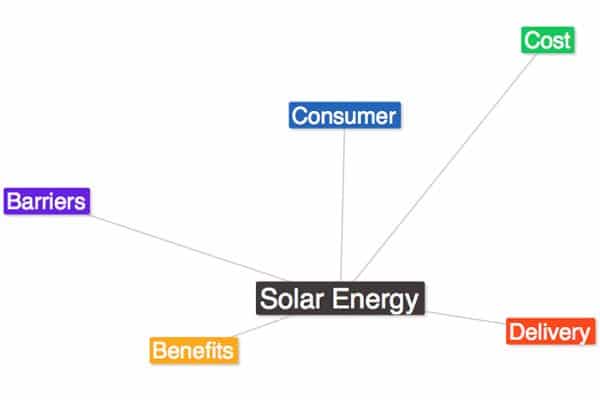
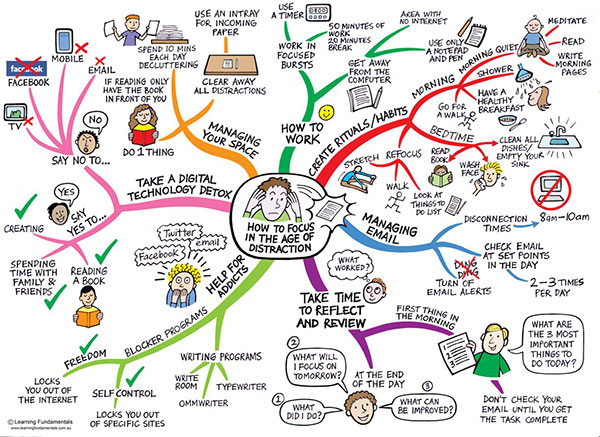
Mind mapping can be used to achieve the following: 
  • Taking note during individual or group meetings.
  • Brainstorming ideas and find innovative solution during meetings.
  • Break down complex problems and idea into simpler and easy to follow fractals.
  • Analyze and process information collected during the research process.
  • Present information in a creative format.


thanks from ifranks

Monday

Galaxy Flip leaks 📱, Elon's EDM 🎵, Cyborg jellyfish 🎐

Samsung is likely to announce its next folding phone this month. The phone is rumored to be called the Galaxy Z Flip, and it will probably be revealed 
TLDR Daily Update 2020-02-03
An online hiring marketplace is changing the way people hire and get hired (Sponsor)
Vettery is home to over 15,000 inspiring companies that are actively hiring the best and the brightest developers, data scientists, product designers, and more. Here's how it works: once you create a profile, hiring managers can extend interview requests based on desired salary, top skills, and career preferences. Even if you're not actively looking for a new job, Vettery's marketplace is a great way to stay on top of the tech landscape and industry trends. Oh, and did we mention it's free?
Big Tech & Startups
Stories about tech giants, startups, and venture capital
Alleged leaked video shows off Samsung's folding Galaxy Z Flip (1 minute read)
Samsung is likely to announce its next folding phone this month. The phone is rumored to be called the Galaxy Z Flip, and it will probably be revealed at Samsung's Unpacked event on February 11th, along with the Galaxy S20 flagship smartphone. Video of the Galaxy Z Flip has been leaked on Twitter. A 19-second video is available that shows the phone being opened and closed.
Apple Is Closing All of Its Stores and Corporate Offices in China Because of the Coronavirus Outbreak (2 minute read)
Apple will close its official stores, corporate offices, and contact centers in China until February 9 due to the coronavirus outbreak. It has also limited employee travel to China to 'business critical' matters. Apple provided care kits to employees, regularly took employees' temperatures, and deep cleaned its stores and offices in the Wuhan area. Its online store will remain open. The coronavirus outbreak could affect Apple earnings and manufacturing capability. Other companies such as Tesla, Google, Microsoft, and Facebook have also temporarily shut down operations in the country due to the virus.

Science & Cutting Edge Technology
Stories about scientific breakthroughs and futuristic technologies like AI, blockchain, and space travel
Scientists create cyborg jellyfish with swimming superpowers (1 minute read)
Californian scientists have developed a swim controller that can turn regular jellyfish into cyborg speed demons. The device enhances a jellyfish's natural motions using electrical impulses, similar to the way a pacemaker regulates heart rate. Once attached, the cyborg jellyfish can swim almost three times faster than unmodified jellyfish while using only twice the metabolic energy. The device doesn't harm the jellyfish and there are no negative effects after being removed. Scientists hope to be able to use cyborg jellyfish to carry sensors into the ocean to gather data from hard-to-reach locations.
Walking around without a protective face mask? (Twitter Video)
We live in strange times, and now many villages and cities in China are using drones equipped with speakers to patrol and communicate with civilians during the coronavirus outbreak. This two-minute video shows drone footage with audio of the drone operator telling civilians to wear their face masks and to stay home. The text in the footage claims that the video is from Inner Mongolia. There is some discussion in the thread saying that the video is civilian-made and not from official sources, as civilians have been receiving communications with opposing information.

Programming, Design & Data Science
Tools, open source, and other resources for programmers, designers, and data scientists
Resources for Beginner Bug Bounty Hunters (GitHub Repo)
This repository is a guide for beginning hackers to start learning the basics of Web Application Security. It covers basics, setting up lab environments, different types of vulnerabilities, mobile hacking, and more. There are extra resources for further learning.
My Second Year as a Solo Developer (12 minute read)
After leaving Google as a software developer two years ago, Michael Lynch set out to build his own software business. In the second year, the business was still not profitable, but it had improved significantly. Lynch worked on several projects, with his 'Is It Keto' both bringing in the most revenue and having the highest running costs. During this time, he learned that higher prices could actually bring in more customers, ideas need to be screened and dumped when appropriate, having higher goals can result in bigger wins, and that life is much more enjoyable as a founder.

Miscellaneous
Random stuff techies might be interested in
Elon Musk releases 'Don't Doubt Ur Vibe' song on SoundCloud, Spotify (1 minute read)
Elon Musk has released his latest single 'Don't Doubt Ur Vibe' on SoundCloud and Spotify under the label Emo G Records. This is Musk's followup to his first single 'RIP Harambe'. The lyrics and vocals were written and performed by Musk. A link to the four-minute track is available.
Instacart Workers Win Historic Union Election (3 minute read)
A group of Instacart employees voted to unionize with the United Food and Commercial Workers Local 1546 on Saturday. Managers distributed anti-union literature prior to the vote, claiming that a union would drain paychecks and have a great deal of control over workers. Most of Instacart's workforce are independent contractors, but around 12,000 workers are legally employees. Instacart has stated that it supports the action of its workers. Workers at Instacart do not receive healthcare and other benefits as their work hours are capped at 29 hours a week. The tech industry has seen unprecedented levels of organization amongst its workers recently. In the last few months, many companies have experienced worker-led strikes, protests, and online boycotts. The victory sends a message to other gig workers around the country who are fed up with working conditions at Silicon Valley tech companies.


Tuesday

The Next Amazon...


Let's examine the Mission Statements of both Amazon and Wal-mart, using marketing management ideas - specifically insights on strategies, goals, technology, sourcing, and orientation. Amazon is Market-Oriented

The world’s fourth largest marketing platform is currently Amazon.com (Markman, 2017). Their Mission Statement is

“To be Earth’s most customer-centric company, where customers can find and discover anything they might want to buy online, and endeavors to offer its customers the lowest possible prices,”
which clearly outlines their valuable purpose for customers and a forward-looking strategy to achieve a goal of low pricing.
Amazon is likely market-oriented, rather than product-, production-, or futuristically oriented.  Product-orientation implies that Amazon mainly creates products itself, which it does not (Business Case Studies, 2019).  Mainly, Amazon offers a multitude of products for sale, sourced through a multitude of vendors; there are a relatively small quantity of products made by Amazon itself (Amazon Branded), sold as substitutes for other vendors’ products, when their inventories are empty, fake, or problematic (Edelman, 2019).
Amazon Branded products are usually at a higher price than other vendors that sell through Amazon, so Amazon is unlikely to be production-oriented (Quain, 2018).  Likewise, despite the inclusion of the forward-looking words “...endeavors to offer…” in their Mission Statement, Amazon’s mission statement is not futuristic, since it accurately describes Amazon today.As implied in Amazon’s Mission Statement, Amazon is strongly market-oriented to “...be Earth’s most customer-centric company...discover anything they might want [at] the lowest possible prices.” Amazon organizes its activities, products, and services around its customers wants and needs (Business Case Studies, 2019), with over 600 million products (Johnson, 2018).
Opinion: Update Wal-Mart’s Mission Statement to Compete with Amazon
Wal-Mart’s Mission Statement has been reviewed and updated over the years; previously, it was “We deliver low prices, every day;”  currently, Wal-Mart’s Mission Statement is “to save people money so they can live better.” Because of internal and external factors relevant to marketing, now may be the best time to review and update Wal-Mart’s Mission Statement, based on my personal experiences.
From our shopping experiences with Wal-Mart, most people buy almost exactly the same products from a local retail location, every week.  Wal-Mart has done little to capitalize on my shopping habits, other than keeping it’s doors open late into the night.
Wal-Mart has sufficient internal qualities to rival that of Amazon, and that Wal-Mart can take advantage of external qualities, given today’s popularity of one-to-one marketing.  Wal-Mart’s goal of “saving money” is a good one, but needs to be updated similar to what they had used previously as a Mission Statement. Perhaps something along the lines of
“We deliver what you need to live better, every day at low prices!”
Mostly Strengths and Few Weaknesses - Internally, Wal-Mart already has the technology and processes to surpass Amazon: online ordering, telephone ordering, delivery to my home, and pick-up from any of their local retail locations; if consumers can't wait for a scheduled delivery, they can simply walk-in and buy from any of their locations.  Wal-Mart ought to utilize their advantage of the worldwide ‘big data’ that they have, and push buying recommendations to consumers, so that we can have our usual purchases delivered regularly. In doing so, they can offer supplemental products that consumers might not know they wanted, but do want... like Amazon does (Wills, 2018).  Though Wal-Mart has lower profit margins than other vendors, this can be overcome by increasing sales volume through 'recommendations' mitigated by their 'big data.'
Opportunities and Threats - With the popularity of home delivery services, Wal-Mart can capitalize on a few aspects: products can be marketed and delivered to remote locations; more hiring can be done to expedite analytics and deliveries; and overall product quality can improve by more accurately eliminating under-performing products, while pushing recommended products (Smithson, 2019).
Unfortunately, because consumers and retailers have already realized that Wal-Mart could become the next Amazon, other retailers have started heavy competitions in the retail/big data/delivery space, according to Investopedia (Segal, 2020).
Summary - Wal-Mart needs to invest more in people and technology to recommend products and “deliver what we need to live better, every day, at low prices,” as soon as possible to win against its competitors.  Updating its Mission Statement will increase its sales volume, profitability, and a loyal base of customers.
REFERENCES
Markman, J. (2017). The Amazon Era: No Profits, No Problem. Forbes. Retrieved from https://www.forbes.com/sites/jonmarkman/2017/05/23/the-amazon-era-no-profits-no-problem/#251a7eed437a 
Business Case Studies, (2019). Market-and-product-orientation. Retrieved from https://businesscasestudies.co.uk/market-and-product-orientation/
Edelman, G. (2019). Amazon Doesn’t Favor Its Own Brands—Except When It Does. Wired. Retrieved from https://www.wired.com/story/amazon-gating-private-labels-antitrust/
Segal, T. (2020). Who Are Amazon's (AMZN) Main Competitors? Company Profiles. Retrieved from https://www.investopedia.com/ask/answers/120314/
who-are-amazons-amzn-main-competitors.asp
Smithson, N. (2019). Walmart SWOT Analysis & Recommendations. Panmore Institute. Retrieved from http://panmore.com/walmart-swot-analysis-recommendations-case-study
Wills, J. (2018). 7 Ways Amazon Uses Big Data to Stalk You (AMZN). Cybersecurity. Retrieved from https://www.investopedia.com/articles/insights/
090716/7-ways-amazon-uses-big-data-stalk-you-amzn.asp
Quain, S. (2018). Difference Between Product Orientation and Production Orientation. Houston Chronicle. Retrieved from https://smallbusiness.chron.com/difference-between-product-orientation-production-orientation-16004.html


thanks from ifranks

Sunday

Gossip, Rumors, and Lies

Originally published 
https://randsinrepose.com/archives/gossip-rumors-and-lies/


meetings are a symptom, not the cure

Gossip, Rumors, and Lies


Everyone is just… sitting there.
Six of you. All managers who report up to Evan, your boss, who decided two weeks ago that “it’s probably a good idea for this leadership team to get together on a regular basis and talk about what is up.” He dropped an agenda-less, sixty-minute recurring meeting on everyone’s calendar and that meeting is now.
Six of you. You know these humans. You work closely with two of them every single day. You’ve had occasional projects of significance with two others. The last two are friendly first names.
Evan kicks off the meeting repeating exactly what he told each of you face-to-face and in the meeting invite. It’s probably a good idea for this leadership team to get together blah blah blah. He finishes his bland opener and everyone is just… sitting there. Saying nothing.
Welcome to your first staff meeting.
An Unacceptable Amount of Crap
I’m solidly on the record as 1:1s being the most important meeting of the week. A very close second is the staff meeting. I find that 1:1s beat staff meetings in two important categories: trust building and quality of signal. But, there are ongoing compounding benefits to a regular well-run staff meeting. Team building, efficient information dissemination, and healthy debate are three I can think of off the top of my head. There are more.
Definitions first. I define a staff meeting as “the correct collection of leadership gathered together to represent a team, product, company, or problem.” Lot of words. A simpler and perhaps more immediately applicable version is, “a meeting of your direct reports.”
Great! You have directs which means you should have a staff meeting, right?
Maybe.
The decision to start your first staff meeting requires judgement. Ask yourself the following questions:
  • How many direct reports? 2? Yeah, no staff meeting necessary. 3 or more? Keep reading.
  • How many of your directs spend time working together? If it’s more than half, consider a staff meeting
  • Do your directs have direct reports? You needed a staff meeting awhile ago.
  • How much has your team grown in the last six months? A lot? Have a staff meeting.
  • How much of the crap that you’ve dealt with in the last month smells like it could have been resolved if people on your team were just talking with each other? If the amount of crap is unacceptable to you, have a staff meeting.
  • Did something recently organizationally explode? Have a staff meeting.
A Well-Intentioned Hatred of Meetings
A new staff meeting is understandably a pretty quiet affair. It’s a delightful combination of unfamiliarity combined with a well-intentioned hatred of meetings. In our hypothetical example above, Evan set horrible initial meeting tone because he committed the worst meeting sin: no agenda.
Here’s an initial agenda:
  • The Minimal Metrics Story
  • Rolling Team-sourced Topics
  • Gossip, Rumors, and Lies
Before I dive into these agenda topics, let’s talk about two essential meeting roles. 95% percent of the activity in a well-run staff meeting is healthy conversation and debate. Keyword: “healthy.” It’s a clear signal that a staff meeting is working when attendees jump into conversations and drive those conversations in unexpected directions. It’s a clear sign that no one is curating those conversations when those unexpected directions are not revealing insight or value.
The Meeting Runner has two jobs: set the agenda and manage the flow. We’ll talk agenda shortly, so let’s first talk about managing flow. The Meeting Runner is responsible for making the following call throughout the meeting: When is this particular conversational thread no longer creating enough value? It’s a nuanced job, but without this human curating the conversation, a staff meeting can turn into directionless heated vent session. Fortunately, as we’ll learn shortly, the Meeting Runner has an essential driving force at their disposal – the agenda.
The role of Meeting Runner is traditionally the human who called the meeting. It’s usually the he or she accountable for the team, which allegedly gives them the context to run the meeting efficiently. Usually.
The second role is Meeting Historian. This non-obvious role is not required in the first few get-to-know-you meetings, but is essential long term. Their job: capture the narrative of the meeting. We’re not looking for every single word, we’re looking for major themes and points that are discussed. Action items, relevant thoughts, jokes, it’s all captured by the Meeting Historian.
Two guidelines for Meeting Historian. First, it can’t be the Meeting Runner because this human has their hands full keeping this meeting pointed in the right direction. Second, the Meeting Historian is not responsible for editorial or curation. Their job is to capture everything. This seems like a no-brainer until you understand that your next job is to send these notes to the entire company.
Wait. What?
Humans have complicated relationships with meetings. If they’re in the meeting and it’s not meeting their expectations, they’re mad. If they’re not invited to a meeting where they believe they should be present, they’re mad. Combine this slippery situation with that fact that meeting efficiency devolves as a function of the number of humans greater than seven and you’ve got a maddening set of complicated constraints. The simple but perhaps controversial practice I’d recommend is that every single meeting have a Meeting Historian and the work of that Historian is broadcast to the whole company.
If you’re a frequent meeting denizen and the hair on the back of your neck stands up when you imagine the notes of your meeting being shared with the whole of your company, my question is, “What are you talking about in that meeting that can’t be shared?” Of course, the Meeting Runner will remove confidential information about individuals as well as other clearly confidential company information before sending. If that doesn’t calm you down, I’m still curious what you think is being said in this meeting that can’t be shared with your team?
Meetings create power structures. Intentionally or not, they become a measure of status. Are you in that meeting? No? Well, I am. If you found sound reason to have a staff meeting in my list above, I’m not worried about the first three month of this meeting’s existence. It’s year two when that good reason may have vanished and now you have this formerly important meeting purely out of habit.
The rule is: in the absence of information, humans fill the gap with the worse possible version of the truth. Two years into your meeting when you’re not sharing the notes, the humans not in the meeting tell the most interesting and untrue stories about what happens in your meeting. I guarantee it. This isn’t out of spite. They aren’t being malicious. They just don’t know what is going on, so they’re going to tell their version of the story.
Share your notes. Every time. The act of doing so will force you to ask the following question before you share them “Is what we are doing here valuable?”
A Three Point Agenda
The Minimal Metrics Story is the list of essential metrics this group must review on a regularly basis and I recommend leading with them because they frame the whole meeting. Not knowing precisely why you chose this precise time and situation to start a staff meeting makes it tricky to recommend what type of metrics you need to review.
What are the key metrics this group is responsible for? Revenue? Application performance? Security incidents? Number of critical bugs filed? The list is endless and it’s ok if your first meetings don’t have these defined. But after a month, if these haven’t shown up, I’m wondering why you pulled this group together? What problem are you trying to solve? I’m not saying you demonstrated poor judgement by calling the meeting, but if a concrete set of measurable things hasn’t shown up, why is the group meeting on a regular basis?
You’ll know you’ve found a good initial set of metrics when they tell a story and leave you with questions. Total billings in the last week were X millions. Recurring revenue added was Y thousands. Last week they were X and Y? That’s a big change. What do we think happened? The questions and the debate that surround the story both align the room and frame the rest of the conversation. There will be weeks where the metrics story is, “Tracking. Nothing to discuss,” but if it’s been three months and that’s the only story, you’ve either got the wrong metrics or the good reason to have this meeting has passed.
A Rolling Team Sourced Agenda is the heart of your meeting. For the first iteration of this meeting, you’ll need to build the agenda yourself. This shouldn’t be hard because there are pressing reasons for these humans to be together. Once, twice, or perhaps three times you can set the agenda for the meeting to address that pressing reason, but at end of the first meeting you say, “Here’s a document I’ve shared with everyone, please add any agenda topics for next time.”
They won’t.
The social fabric and the sense of team that you are building with this meeting will take time to form and you’ll need to be more involved in both building the agenda and moving the narrative along for the first handful of meetings. You’re looking for two important developments over the course of the first three meetings:
1) Unexpectedly useful conversational detours. You’re going to do a lot of talking in the first few meetings because you’re the leader, you’ve identified some problem, and you’re attempting to solve it. Good job, but very quickly you need to stop talking. Introvert leaders of the world will have no problem with this advice. Extrovert leaders. Listen to me. It’s not your meeting, it’s their meeting. You need everyone in the room to bring their experience, their questions, their curiosity, and their drive to the table and they each need to feel comfortable sharing these thoughts. If you don’t stop talking, they won’t start.
2) A similar positive health sign is the arrival of unsolicited agenda items by the rest of the room. I’m not talking about the ones you ask for, I’m talking about the agenda items that just appear. These random new additions are emerging proof that the rest of the room is beginning to see that this is a meeting where work is done.
Staff meetings are an hour. It feels like a lot of time, but when this meeting is working you’ll effortlessly fill the time.
It’s a rolling agenda because the steady healthy state for this meeting is that you never get through the agenda – there are too many topics to discuss.
Gossip, Rumors, and Lies is the final permanent agenda item. With the last five to ten minutes of your meeting, you’re carving off time for communication error correction. I’ll explain.
The reason you’re having this meeting is because of a seismic shift. Your team suddenly grew, your company changed direction, major responsibility shifted, or maybe a reorganization occurred. The knee-jerk move when a shift occurs is to call all the relevant parties into the room and ask, “WTF?” This feels good. People talk and explain their feelings regarding the shift. Information is shared, we nod, and feel aligned, but other than the therapy, we didn’t solve whatever problem existed that precipitated the need for this meeting. Meetings are a symptom of a disease, they are not the cure.
The metrics framing and rolling agenda should give you an actionable narrative. They should give you the opportunity for the airing and discussion of grievances. They should create a set of follow-up work that is far more likely the cure. However, you should still be asking, “WTF?”
This final section of your staff meeting is a safe place for all participants to raise any issue, to ask any random question, or to confirm any hallway or Slack chatter. Chances are, whatever seismic event caused this meeting to occur is still being organizationally digested and often the stories being told are absurd. Gossip, Rumors, and Lies is time to get that important absurdity out in the open, so you can begin to construct a healthy response.
Meetings are a Symptom, Not the Cure
High on my list of professional pet peeves is the emergence of corrosive politics within a company. Politics are a natural development in a large group of humans working together. Corrosive politics give me rage: taking credit for other’s ideas, hoarding information, or not allowing the best idea to win. The list goes on and on and when I discover this type of politics where I work there is rage, so I’ve spent a good portion of my career understanding the root causes.
Seismic shifts within your company or team create change, and humans attempting to get work done consistently, of high quality, and at velocity don’t like change. It harshes their productivity buzz. The intensity of their response to change is a function of their discomfort and that discomfort increases exponentially the longer their discomfort remains unresolved.
The reason meetings have evolved as an acceptable first response is because they do address one key issue: they give the team an opportunity to discuss their perceptions of the change. This feels good. The reason meetings are often hated is because while talking feels good, it’s not true progress.
If you’ve called the meeting for the right reason, if you’ve discovered story-filled metrics, if you build a compelling team-sourced agenda, if you give everyone time to discuss the absurd, and if you share the insights from this meeting with everyone, you’ve given the team a chance to collectively resolve the core issue. The sharing of this work will decrease miscommunication, it can help inoculate against politics, and it will create unexpected serendipity.
No one is going to just sit there when they understand the problems at hand, they trust they can be heard, and they can count on resolution.

Saturday

Cheers to all of our volunteers + 100,000 Blessings!


Thanks to everyone that participated in our fundraising event on Thursday and Friday.

Together, we raised over $100,000.00 to benefit Calgary education initiatives. Way to go - blessings and thank ye!

#generosity

More...