


Friday
Canadian origins: NYSE PTR - analysis of PetroChina's Financial Statements in USD...
A case study of https://www.nyse.com/quote/XNYS:PTR
Stock Chart with MACD

Sales Volume and Variable Cost per Ton

Principal Operations by Segment and by Product

Refining and Chemicals

Shares Outstanding

Income Statement


Balance Sheet


Statement of Cash Flow

References
Canadian Roots. (2020). Pride in Heritage. [About Us and online image]. PetroChina Canada. Retrieved from https://www.petrochinacanada.com/about-us/cnpc-family.html
Financial Statements in USD courtesy of Scotiabank https://www.scotiabank.com/global/en/global-site.html
Sunday

How to keep 'doing your thing' without Internet...
If an outage of Internet service is likely, here are some fascinating features to keep using some of our systems offline:
Gmail
Gmail, surprisingly, works fairly well offline. It can't actually send and receive emails without an internet connection, but it will let you search through old messages and compose new ones (which can then be sent as soon as connectivity returns).
In your web browser, click the cog icon (on the right), then Settings and Offline—check the box marked Enable offline mail, and choose how many days of messages you want to sync to your computer (7, 30 or 90).
Google Drive
In offline mode, Google Drive lets you create, view and edit Docs, Sheets and Slides, with changes synced back to the cloud when an internet connection returns.
You need to put in some preparation first though. On Google Drive on the web, click the cog icon (top right), then choose Settings and General—make sure the Offline box is ticked, and Drive will start syncing files to the local computer.
Google doesn't make it clear exactly how many files get synced, but in our experience it's at least a month's worth, starting with the most recent. To make absolutely sure a specific file is available without an internet connection, right-click on it and turn the Available offline toggle switch on. Also, if you find you're running out of space in Gmail, we have some tips to help trim back to the stuff you really need.
iCloud
Apple's iCloud platform will move older, less frequently used files off your Mac if you start running out of space on your computer, keeping copies in the cloud and downloading them as and when you need them. If you want to make sure this offloading doesn't happen, open System Preferences, then click Apple ID and iCloud, and untick the box that's marked Optimize Mac Storage.
Pocket
Pocket is one of the best read-it-later services on the web, able to store up all those articles you don't have time to read, and store them safely for when you're able to get around to them. Pocket can work offline, if needed, so if you're researching something it might be a good idea to save a few key webpages to Pocket so you can get at them without a web connection.
You'll need the Pocket app for macOS, the Pocket extension for Chrome, or the Firefox browser (which has Pocket built-in) to enable offline support: Pocket downloads articles automatically in the background on the Mac and inside Chrome, but on Firefox you need to open an article while you're online to make sure it stays available if you ever go offline (click Library then View Pocket List).
Spotify
Having offline access to your playlists might not be as critical as having offline access to your work documents, but music is important for productivity, right? To store a specific playlist for offline playback, open it in the Spotify application for Windows on macOS, and turn on the Download toggle switch.
Netflix
When the working day is done and you want to kick back with some Netflix, having a borked internet connection can really mess with your binge-watching plans. All is not lost if you're using Windows though—you just need to download the Netflix app for Windows and queue up movies and shows in advance (no love for Mac users yet, unfortunately).
Not every show and movie can is available for offline viewing, but many of them are: Choose Available to Download from the app menu to see a selection. Whenever you see a downward arrow symbol on the listing page for a show or film, it means it can be saved locally—just click the icon to start the download.

Nield, D. (2020, May 31). How to Take Your Work Offline in Case of an Emergency. Wired. Retrieved from
https://www.wired.com/story/work-offline-blackout-google-gmail/
Saturday
Can private-equity firms turn a crisis into an opportunity?
MOST APPARENTLY sound stewards of capital were revealed to be anything but during the 2007-09 financial crisis. Bank bosses were shown to have taken on too much risk. Star hedge-fund managers suffered losses. Nor have the years since then been kind. Banks have been tied up in regulatory knots and returns at hedge funds have been pedestrian at best.
The private-equity (PE) industry has been an exception to the trend. The funds it deployed during the crisis in 2007-09 have ended up yielding a median annualized return of 18%. And it has become far more important. Investors, from university endowments to public pension funds, have handed over ever more cash to PE managers (see chart). The biggest PE firms have evolved into financial conglomerates straddling buy-outs, property and credit markets, taking over some of the roles that Wall Street banks used to play. Assets under management have swollen to more than $4trn. The 8,000 firms run by in America account for 5% of its GDP, and a similar share of its workforce.
/https%3A%2F%2Fwww.economist.com%2Fsites%2Fdefault%2Ffiles%2Fimages%2Fprint-edition%2F20200530_FNC772.png)
Now another savage recession is in full swing and the performance of PE is a crucial question for investors and the economy. The leveraged companies and debt instruments in PE portfolios are vulnerable and much depends on whether managers can tide these investments over. Meanwhile they have amassed $1.6trn in dry powder that they can deploy on new deals. PE shops’ fate depends on whether the hit to their existing investments is nasty enough to wipe out the potential gains from dealmaking afforded by the crisis.
/https%3A%2F%2Fwww.economist.com%2Fsites%2Fdefault%2Ffiles%2Fimages%2Fprint-edition%2F20200530_FNC733.png)
Start with the potential losses. In the first quarter of 2020 the four large listed PE firms, Apollo, Blackstone, Carlyle and KKR, reported paper losses on their portfolios of $90bn. That sounds big, but is just 7% of their assets under management, reflecting their ability to control how privately held assets are valued and, perhaps, their investment acumen. After an early scare PE firms’ shareholders have concluded that the outlook is fairly bright (see chart).
Are they right? Many PE managers have been juicing up returns by piling debt on to the companies they buy. In the years immediately after the last crisis most buy-out deals were done with debt worth no more than six times gross operating profits. By 2019, according to Bain & Company, a consultancy, three-quarters of deals were leveraged at over six times. That would suggest that PE-run firms are vulnerable. More than half of the 18 junk-rated firms that defaulted in the first quarter of the year were PE-owned, according to Moody’s, a rating agency. It expects the overall junk default rate to triple to 14% by 2021.
Over the past decade PE lending has shifted away from dopey, distracted banks towards specialist private-credit firms. These may be more hard-nosed about accepting a haircut on their debt in order to keep a PE-run business afloat. And making things trickier still, most big PE managers say that the firms they own are either ineligible for, or unwilling to tap, the American government’s business bail-out schemes, the Paycheck Protection Programme and the Main Street Lending Programme.
Even so, several other factors may have changed to work in PE’s favour. Much debt issued to back PE deals has become “covenant-light”, meaning that companies can endure a big slump in profits without triggering penalties from their lenders. Since the 2007-09 crisis many PE managers have also set up huge credit arms—for the big four firms, these now account for a third of their assets. They may give managers more in-house expertise and mechanisms for raising debt, making it easier to restructure the debts of fragile portfolio companies on favourable terms.
The strange nature of the recession may mean PE managers are unwilling to pull the plug, as activity is likely to resume after the shutdown. “There is a problematic gap,” says Marc Lipschultz, founder of Owl Rock, a private-credit fund. “We don’t know how deep or how wide it is, but funds need to find a bridge across.” And if PE-run firms cannot raise more debt, default or restructure their borrowings, the remaining option is an “equity cure”: PE shops stump up the cash to keep their firms afloat. Already around 70% of PE bosses polled by EY say they will need to inject fresh equity into their portfolio companies.
The way funds are structured means that managers cannot deploy their “dry powder” raised for new funds into firms owned by older ones. But most older funds do have big reserves. Michael Chae, the chief financial officer of Blackstone, says that around $30bn of its $152bn of dry powder is set aside for them. “We have those reserves ready to support companies on the defensive and also to go on the offensive when opportunities arise.” Funds are also gathering capital in other ways. Typically, a PE fund returns cash to its investors once it sells its stake in a company—but if the investment period is still ongoing, the fund can ask for it back. According to an industry body for PE investors, the number of calls for such “recycled capital” has risen.
Bailing out existing investments will drag down returns for PE shops. It remains to be seen if buying opportunities can make up for that. Most PE managers hope to use their newly expanded credit arms to scoop up bombed-out loans and bonds with collapsed prices—Leon Black, the founder of Apollo, has said the opportunity is “massive”. But the volume of traditional buy-outs dropped sharply in March, and only a few firms have since made purchases. For years PE barons have boasted of their huge piles of dry powder, which, if spent in a downturn, might generate outsized returns. Now it is time to pounce.■
Editor’s note: Some of our covid-19 coverage is free for readers of The Economist Today, our daily newsletter. For more stories and our pandemic tracker, see our coronavirus hub
This article appeared in the Finance & economics section of the print edition under the headline "More money, more problems"
Wednesday
Queen - Radio Ga Ga...
This music video seems apt during a pandemic with rioting and the prevalence of masks.
https://www.youtube.com/watch?v=azdwsXLmrHE

https://www.youtube.com/watch?v=azdwsXLmrHE
Sunday
Resistance to Change

- Your total resistance-to-change rating is about average. You see both the advantages and disadvantages in changes and are not typically inclined to either resist or promote them.
- The particular characteristics of the change at hand are more likely to determine your approach towards it. As far as your approach towards routines is concerned, you don't appear to feel very strongly about them.
- There are things that you like to do on a regular basis, but on occasion you like to break your routines and do something unexpected or unplanned.
- Your emotional reaction to changes is mild. You don't feel too stressed in their presence, but are not entirely indifferent to them.
- When you think about change, you tend to focus on their long-term implications. You are not too bothered by the short-term inconveniences that changes often entail and will not let them interfere with your decision-making.
- Beyond this, you appear to be rather flexible in your way of thinking. You are generally open-minded and are willing to reconsider your views.
Tuesday
Choose the Right Words in an Argument
Reposted from https://hbr.org/2014/06/choose-the-right-words-in-an-argument
When addressing a conflict with a colleague, the words matter. Sometimes, regardless of how good your intentions are, what you say can further upset your coworker and just make the issue worse. Other times you might say the exact thing that helps the person go from boiling mad to cool as a cucumber.
So, when things start to heat up with a colleague — you don’t see eye-to-eye on a project or you aren’t happy with the way you were treated in a meeting, for example — how can you choose your words carefully? To help answer this question, I talked with Linda Hill, the Wallace Brett Donham Professor of Business Administration at Harvard Business School and faculty chair of the Leadership Initiative. She is also the co-author of Collective Genius: The Art and Practice of Leading Innovation and Being the Boss: The 3 Imperatives for Becoming a Great Leader.
Hill explained that the words we use in confrontations can get us into trouble for three reasons:
First, the stakes are usually high when emotions are. “With conflict, there are typically negative emotions involved, and most of us aren’t comfortable with those kinds of feelings,” she says. Our discomfort can make us fumble over our words or say things we don’t mean.
The second reason that we often say the wrong thing is because our first instincts are usually off. In fact, it’s often the words we lead with that get us into so much trouble. “That’s because too often we end up framing the issue as who’s right or who’s wrong,” she says. Instead of trying to understand what’s really happening in a disagreement, we advocate for our position. Hill admits that it’s normal to be defensive and even to blame the other person, but saying “You’re wrong” or “Let me tell you how I’m right” will make matters worse. “We’re often building a case for why we’re right. Let that go and focus on trying to resolve the conflict,” she says.
Third, there’s often misalignment between what we mean when we say something and what the other person hears. “It doesn’t matter if your intent is honorable if your impact is not,” Hill says. Most people are very aware of what they meant to say but are less tuned into what the other person heard or how they interpreted it.
So how do you avoid these traps? Hill says it’s not always easy but by following a few rules of thumb, you’ll have a better chance of resolving the conflict instead of inciting it:
Say nothing. “If the emotional level is high, your first task is to take some of the emotion out,” she says. “Often that means sitting back and letting someone vent.”
The trouble is, Hill says, that we often stop people before they’ve gotten enough of the emotion out. “Hold back and let them say their piece. You don’t have to agree with it, but listen,” she says. While you’re doing this, you might be completely quiet or you might indicate you’re listening by using phrases like, “I get that” or “I understand.” Avoid saying anything that assigns feeling or blame, like “Calm down” or “What you need to understand is.” If you can do this effectively, without judging, you’ll soon be able to have a productive conversation.
Ask questions. Hill says that it’s better to ask questions than make statements. Instead of thinking about what you want to say, consider what you want to learn. This will help you get to the root cause of the conflict and set you up to resolve it. You can ask questions like, “Why did that upset you?” or “How are you seeing this situation?” Use phrases that make you appear more receptive to a genuine dialogue. Once you’ve heard the other person’s perspective, Hill suggests you paraphrase and ask, “I think you said X, did I get that right?”
Own your part. Don’t act like there is only one view of the problem at hand. “You need to own your perception. Start sentences with ‘I’ not ‘you,'” Hill says. This will help the other person see your perspective and understand that you’re not trying to blame them for the problem. Instead of saying “You must be uncomfortable”, try “I’m feeling pretty uncomfortable.” Don’t attribute emotions to other people. That just makes them mad.
So, how do you choose the right words to use in a conflict? Of course, every situation is different and what you say will depend on the content of what you’re discussing, your relationship with the other person, and the culture of your organization, but these suggestions may help you get started:
Scenario #1: You have a criticism or dissent to offer. Perhaps you disagree with the popular perspective or perhaps you’re talking to someone more powerful than you.
Hill suggests you get to the underlying reason for the initiative, policy, or approach that you’re disagreeing with. Figure out why the person thinks this is a reasonable proposal. You can say something like, “Sam, I want to understand what we’re trying to accomplish with this initiative. Can you go back and explain the reasoning behind it?” or “What are we trying to get done here?” Get Sam to talk more about what he’s up to and why. Then you can present a few options for how to accomplish the same goal using a different approach: “If I understand you correctly, you’re trying to accomplish x, y, and z. I’m wondering if there’s a different way to approach this. Perhaps we can…”
In a situation like this, you also want to consider the venue. “You may be able to have a more candid discussion with someone if it’s one-on-one meeting rather than in front of a group,” she says.
Scenario #2: You have bad news to deliver to your boss or another coworker. You missed a deadline, made a mistake, or otherwise screwed up.
Hills says the best approach here is to get to the point: “I have some news to share that I’m not proud of. I should’ve told you sooner, but here’s where we are.” Then describe the situation. If you have a few solutions, offer them up: “These are my ideas about how we might address this. What are your thoughts?” It’s important to own up that you made a mistake and not try to point out all the reasons you did what you did.
Scenario #3: You approach a coworker about something he or she messed up.
Here you don’t want to launch in right away, Hill says, but ask permission to speak to the person about what happened: “Mary, can I have a moment to talk to you about something?” Then describe what happened. You can say: “I’m a little confused about what occurred and why it occurred. I want to discuss it with you to see how we can move this forward.” Use phrases like “I understand that X happened…” so that if Mary sees the situation differently, she can disagree with your perspective. But don’t harp too long on what happened. Focus on figuring out a solution by engaging her with something like: “What can we do about this?”
Scenario #4: You approach a colleague about feeling mistreated or you’re upset about something he or she said.
Hill points out that this is a good place to talk about the difference in intent versus impact. After all, you don’t know what your coworker’s intent was; you only know that you’re upset. You can start off with something like: “Carl, It’s a little bit awkward for me to approach you about this, but I heard that you said X. I don’t know whether it’s true or not. Regardless, I thought I should come to you because I’m pretty upset and I thought we should talk about it.” The focus shouldn’t be on blaming the person but airing your feelings and trying to get to a resolution: “I want to understand what happened so that we can have a conversation about it.”
If Carl gets defensive, you can point out that you aren’t questioning his intent. “I’m not talking about what you intended. I thought it was better to clear the air, rather than stewing about it. Would you agree?”
Scenario #5: A colleague yells at you because of something you said or did.
This is where you might stay quiet at first and let them vent. People usually run out of steam pretty quickly if you don’t reciprocate. Keep in mind though, Hill says, that you never deserve to be yelled at. You might say: “I realize that I’ve done something to upset you. I don’t respond well to being yelled at. Can we sit down when I can be better prepared to have a conversation about this?”
Scenario #6: You’re managing someone who engages in conflict regularly and is annoying or upsetting the other people on your team.
Sometimes you have a hothead on your team — someone who seems to even enjoy conflict. Of course disagreements aren’t always a bad thing, but you need to help the person explore how he might be damaging his reputation and relationships. You can try something like: “I like having you around because from where I sit, you raise important issues and feel strongly about them. I also know you’re well-intentioned. I’d like to talk you about whether you’re having the impact you want to have.” Get him to think through the consequences of his regular battles.
Of course, even if you follow this advice, sometimes there just aren’t the right words and it’s not possible to have a constructive discussion. “Occasionally, you need to let it go and come back to it another time when you can both have the conversation,” says Hill. It’s OK to walk away and return to the discussion later, when you’re ready to make a smart and thoughtful choice about the words you want to use.
When addressing a conflict with a colleague, the words matter. Sometimes, regardless of how good your intentions are, what you say can further upset your coworker and just make the issue worse. Other times you might say the exact thing that helps the person go from boiling mad to cool as a cucumber.
So, when things start to heat up with a colleague — you don’t see eye-to-eye on a project or you aren’t happy with the way you were treated in a meeting, for example — how can you choose your words carefully? To help answer this question, I talked with Linda Hill, the Wallace Brett Donham Professor of Business Administration at Harvard Business School and faculty chair of the Leadership Initiative. She is also the co-author of Collective Genius: The Art and Practice of Leading Innovation and Being the Boss: The 3 Imperatives for Becoming a Great Leader.
Hill explained that the words we use in confrontations can get us into trouble for three reasons:
First, the stakes are usually high when emotions are. “With conflict, there are typically negative emotions involved, and most of us aren’t comfortable with those kinds of feelings,” she says. Our discomfort can make us fumble over our words or say things we don’t mean.
The second reason that we often say the wrong thing is because our first instincts are usually off. In fact, it’s often the words we lead with that get us into so much trouble. “That’s because too often we end up framing the issue as who’s right or who’s wrong,” she says. Instead of trying to understand what’s really happening in a disagreement, we advocate for our position. Hill admits that it’s normal to be defensive and even to blame the other person, but saying “You’re wrong” or “Let me tell you how I’m right” will make matters worse. “We’re often building a case for why we’re right. Let that go and focus on trying to resolve the conflict,” she says.
Third, there’s often misalignment between what we mean when we say something and what the other person hears. “It doesn’t matter if your intent is honorable if your impact is not,” Hill says. Most people are very aware of what they meant to say but are less tuned into what the other person heard or how they interpreted it.
So how do you avoid these traps? Hill says it’s not always easy but by following a few rules of thumb, you’ll have a better chance of resolving the conflict instead of inciting it:
Say nothing. “If the emotional level is high, your first task is to take some of the emotion out,” she says. “Often that means sitting back and letting someone vent.”
The trouble is, Hill says, that we often stop people before they’ve gotten enough of the emotion out. “Hold back and let them say their piece. You don’t have to agree with it, but listen,” she says. While you’re doing this, you might be completely quiet or you might indicate you’re listening by using phrases like, “I get that” or “I understand.” Avoid saying anything that assigns feeling or blame, like “Calm down” or “What you need to understand is.” If you can do this effectively, without judging, you’ll soon be able to have a productive conversation.
Ask questions. Hill says that it’s better to ask questions than make statements. Instead of thinking about what you want to say, consider what you want to learn. This will help you get to the root cause of the conflict and set you up to resolve it. You can ask questions like, “Why did that upset you?” or “How are you seeing this situation?” Use phrases that make you appear more receptive to a genuine dialogue. Once you’ve heard the other person’s perspective, Hill suggests you paraphrase and ask, “I think you said X, did I get that right?”
Own your part. Don’t act like there is only one view of the problem at hand. “You need to own your perception. Start sentences with ‘I’ not ‘you,'” Hill says. This will help the other person see your perspective and understand that you’re not trying to blame them for the problem. Instead of saying “You must be uncomfortable”, try “I’m feeling pretty uncomfortable.” Don’t attribute emotions to other people. That just makes them mad.
So, how do you choose the right words to use in a conflict? Of course, every situation is different and what you say will depend on the content of what you’re discussing, your relationship with the other person, and the culture of your organization, but these suggestions may help you get started:
Scenario #1: You have a criticism or dissent to offer. Perhaps you disagree with the popular perspective or perhaps you’re talking to someone more powerful than you.
Hill suggests you get to the underlying reason for the initiative, policy, or approach that you’re disagreeing with. Figure out why the person thinks this is a reasonable proposal. You can say something like, “Sam, I want to understand what we’re trying to accomplish with this initiative. Can you go back and explain the reasoning behind it?” or “What are we trying to get done here?” Get Sam to talk more about what he’s up to and why. Then you can present a few options for how to accomplish the same goal using a different approach: “If I understand you correctly, you’re trying to accomplish x, y, and z. I’m wondering if there’s a different way to approach this. Perhaps we can…”
In a situation like this, you also want to consider the venue. “You may be able to have a more candid discussion with someone if it’s one-on-one meeting rather than in front of a group,” she says.
Scenario #2: You have bad news to deliver to your boss or another coworker. You missed a deadline, made a mistake, or otherwise screwed up.
Hills says the best approach here is to get to the point: “I have some news to share that I’m not proud of. I should’ve told you sooner, but here’s where we are.” Then describe the situation. If you have a few solutions, offer them up: “These are my ideas about how we might address this. What are your thoughts?” It’s important to own up that you made a mistake and not try to point out all the reasons you did what you did.
Scenario #3: You approach a coworker about something he or she messed up.
Here you don’t want to launch in right away, Hill says, but ask permission to speak to the person about what happened: “Mary, can I have a moment to talk to you about something?” Then describe what happened. You can say: “I’m a little confused about what occurred and why it occurred. I want to discuss it with you to see how we can move this forward.” Use phrases like “I understand that X happened…” so that if Mary sees the situation differently, she can disagree with your perspective. But don’t harp too long on what happened. Focus on figuring out a solution by engaging her with something like: “What can we do about this?”
Scenario #4: You approach a colleague about feeling mistreated or you’re upset about something he or she said.
Hill points out that this is a good place to talk about the difference in intent versus impact. After all, you don’t know what your coworker’s intent was; you only know that you’re upset. You can start off with something like: “Carl, It’s a little bit awkward for me to approach you about this, but I heard that you said X. I don’t know whether it’s true or not. Regardless, I thought I should come to you because I’m pretty upset and I thought we should talk about it.” The focus shouldn’t be on blaming the person but airing your feelings and trying to get to a resolution: “I want to understand what happened so that we can have a conversation about it.”
If Carl gets defensive, you can point out that you aren’t questioning his intent. “I’m not talking about what you intended. I thought it was better to clear the air, rather than stewing about it. Would you agree?”
Scenario #5: A colleague yells at you because of something you said or did.
This is where you might stay quiet at first and let them vent. People usually run out of steam pretty quickly if you don’t reciprocate. Keep in mind though, Hill says, that you never deserve to be yelled at. You might say: “I realize that I’ve done something to upset you. I don’t respond well to being yelled at. Can we sit down when I can be better prepared to have a conversation about this?”
Scenario #6: You’re managing someone who engages in conflict regularly and is annoying or upsetting the other people on your team.
Sometimes you have a hothead on your team — someone who seems to even enjoy conflict. Of course disagreements aren’t always a bad thing, but you need to help the person explore how he might be damaging his reputation and relationships. You can try something like: “I like having you around because from where I sit, you raise important issues and feel strongly about them. I also know you’re well-intentioned. I’d like to talk you about whether you’re having the impact you want to have.” Get him to think through the consequences of his regular battles.
Of course, even if you follow this advice, sometimes there just aren’t the right words and it’s not possible to have a constructive discussion. “Occasionally, you need to let it go and come back to it another time when you can both have the conversation,” says Hill. It’s OK to walk away and return to the discussion later, when you’re ready to make a smart and thoughtful choice about the words you want to use.
Handwritten notes, mind-maps, & bullet journals...
Some ideas if you prefer the ease of handwriting notes, mind-mapping, or bullet journaling:
Taking Notes by Hand--Advantages
- You can pay attention to what's happening in the meeting rather than focusing on typing.
- You can easily draw arrows, cross out words, and underline information without having to look for the right key. You can use your own method of notation or shorthand.
- It's faster to write if you are a slow typist.
- You can easily write notes on the meeting handouts.
- There's less temptation to record every word.
- There's no worry about what might go wrong with the computer.
- It's quieter and less distracting to other people in the room.
Taking Notes by Hand--Disadvantages
- You may not be able to read your handwriting.
- You may not be able to keep up if you write slowly.
- Your writing hand can get tired if it's a long meeting.
- It's a longer two-step process of writing, then typing.
- You may misplace your written notes and lose everything.
For more information, check out Lynn's recommendations at Syntax Training
Thursday
Youtube's TikTok competitor 🎬, Zoom 0-Day 🐛, coronavirus vaccine trials 💉
Building scalable web scrapers has never been easier. Scraper API handles proxies, browsers, and CAPTCHAs for you, so you can get the HTML from any web page with an API call. Instantly turn any website into an API!
If you would like to sponsor TLDR, please let me know by replying to this email!
Big Tech & StartupsStories about tech giants, startups, and venture capital
YouTube reportedly working on TikTok competitor called Shorts (1 minute read)
TikTok has changed the video entertainment scene and now YouTube is looking to compete directly with it by launching its own version called 'Shorts'. Users will be able to upload brief videos into a feed inside the Shorts app and take advantage of the licensed music that YouTube Music has in its catalog. It is clear from TikTok's growth why YouTube now wants a piece of the action. YouTube has previously taken features from other social media platforms and integrated it into its own, for example, Instagram Stories. Facebook is currently testing its own version of TikTok in Brazil.
Ex-NSA hacker drops new zero-day doom for Zoom (2 minute read)Zoom's popularity has recently rocketed and this has led to an increased focus on the company's security and privacy practices. Three bugs have been discovered, one that can be abused to steal Windows passwords, and another two that can be abused to take over a Zoom user's Mac, including tapping into the webcam and microphone. One of the Mac bugs allows a user with low-level privileges to inject the Zoom installer with malicious code to obtain root access. The other bug tricks Zoom into giving an attacker the same access to the webcam and microphone that Zoom already has without notifying the user. Zoom has not yet fixed the Mac vulnerabilities.
Science & Cutting Edge Technology
Stories about scientific breakthroughs and futuristic technologies like AI, blockchain, and space travel
SpaceX's Starship user guide details how it could replace the Space Shuttle and offer comfy passenger flights (3 minute read)
The first version of SpaceX's Starship spacecraft user manual has been released. It is not as detailed as SpaceX's manuals for other spacecraft but it provides insight into how the Starship will be used. Starship will be able to transport plenty of cargo into space and can be configured to support as many as 100 people. SpaceX will be launching Starships from both the Kennedy Space Center in Florida and Boca Chica in Texas.
A neural network can help spot Covid-19 in chest x-rays (1 minute read)COVID-Net is a convolutional neural network that is trained to identify signs of COVID-19 in chest x-rays. It is being released as an incomplete solution and the firm that created the system is encouraging others to help make it complete. Other research teams have announced AI tools that can diagnose COVID-19 from x-rays, but none of these tools have been made fully available to the public. While COVID-Net as yet to prove itself, public releases have historically proven to be effective methods of improving software.
Programming, Design & Data Science
Tools, open source, and other resources for programmers, designers, and data scientists
tsParticles (GitHub Repo)
tsParticles is a lightweight TypeScript library for creating particles. It is almost completely dependency-free (it requires pathseg for the Polygon Mask feature and Icon Fonts must be included in the page). It is fully compatible with the particles.js configuration - you only need to change the script source to convert it to tsParticles. tsParticles supports custom shapes and presets.
Theia (GitHub Repo)Theia is an extensible platform for developing full-fledged multi-language Cloud & Desktop IDE-like products with state-of-the-art web technologies. It provides a highly flexible architecture and supports VS Code Extension protocol. Guide and examples of common scenarios are provided.
Miscellaneous
Random stuff techies might be interested in
Why I am volunteering to get the coronavirus vaccine (7 minute read)
45 people in Seattle will soon get an experimental COVID-19 vaccine. Several vaccines are in development, but the first to be tested is a novel type of shot developed by Moderna Therapeutics. Study participants signed a 20-page consent form which acknowledges that the vaccine might not be effective and that they agree to the experimental conditions. There are risks such as anaphylactic shock and antibody-dependent enhancement. The vaccine delivers the genetic material required for the immune system to produce coronavirus antibodies. This type of vaccine has been in development for some time, and one in three patients in the past who have received it experienced severe pain that interfered with normal activity for the rest of the day. Volunteers are paid, and the study lasts for 14 months.
Campus is closed, so college students are rebuilding their schools in Minecraft (8 minute read)University of Pennsylvania students recreated their campus in Minecraft after being told that their college commencement would be held online. Students report it being a rewarding experience to be able to recreate the campus they are graduating from, allowing them a chance to properly finish out their experience. Minecraft servers and creations are now being shared on Discord, Facebook, and Reddit. Minecraft has become a place where students can log in and process the sudden loss of an on-campus community. In May, there will be in-game graduations on a server specifically created to host Class of 2020 graduations for students from hundreds of different universities. At least 278 institutions have signed up so far.
A Few Intricacies of Marketing Online...
For organizations that sell products and services to more than one geographic region, online marketing can create a windfall of revenue. At the same time, there are several ideas that must be considered as part of an overall customer service strategy.
 (Sherman, 2019)
CRM Companies ought to maintain information about each and every customer that chooses to interact with the company, limited by budgets. To wit, companies can take advantage of data and patterns from customers, through the tracking of digital customer payments (e.g. credit cards or loyalty programs), buying quantities for given time periods, and returns/complaints -- while respecting company warranties, customer privacy, and ethics. Making customers trackable in a CRM improves a company’s ability to recognize patterns in Attitudinal Loyalty, Behavioral Loyalty, and Satisfaction, which are helpful for reviewing / planning Marketing Strategies.
IDENTIFICATION - Companies sometimes are unable to create a holistic customer record, mostly due to the proliferation of multiple ‘accounts/identities’ online. For example, Justin Trudeau may be ‘Justin T' on Facebook, ‘Prime Minister’ on Twitter, and Trudeau@gmail.com on email. The task of linking all accounts to the same person is daunting, flying in the face of good CRM theology and defeating most forms of analytics. Companies may have a Community Manager resolve such conundrums, linking up each identity manually, or design a loyalty program with incentives to encourage people to enable such tracking of themselves.
CUSTOMER GAPS Marketing is usually positive, in that it promotes the benefits bestowed by products/services to customers. Unfortunately, when marketing is too positive, there may be a significant Gap “between customer expectations and customer perceptions,” from the company over-stating the benefits (EPM, 2018). However, if companies promote their products in an understated way, customers can be pleasantly surprised (Gap) by all of the many benefits that are unexpected.
Greenberg, P. (2009, December 9). CRM at the Speed of Light, Fourth Edition: Social CRM 2.0 Strategies, Tools, and Techniques for Engaging Your Customers.
Hart, Stefan & Kassem, Gamal. (2012). Social Customer Relationship Management – From Customer To Friend.
Principles of Marketing. (2010). Retrieved from https://open.lib.umn.edu/principlesmarketing/part/chapter-15-price-the-only-revenue-generator/
Sherman. (2019, September 27). [Online Image.] Online Marketing 101: The First Steps to Becoming an Expert. LYFE Marketing. Retrieved from https://www.lyfemarketing.com/blog/online-marketing-101/
Techopedia. (2016, December 28). Electronic Customer Relationship Management (E-CRM). Techopedia. Retrieved from https://www.techopedia.com/definition/30914/electronic-customer-relationship-management-e-crm
(Sherman, 2019)CRM Companies ought to maintain information about each and every customer that chooses to interact with the company, limited by budgets. To wit, companies can take advantage of data and patterns from customers, through the tracking of digital customer payments (e.g. credit cards or loyalty programs), buying quantities for given time periods, and returns/complaints -- while respecting company warranties, customer privacy, and ethics. Making customers trackable in a CRM improves a company’s ability to recognize patterns in Attitudinal Loyalty, Behavioral Loyalty, and Satisfaction, which are helpful for reviewing / planning Marketing Strategies.
E-CRM
Using customer “emails, websites, chat rooms, forums and other channels to achieve CRM objectives” (Techopedia, 2016) ought to be the norm for all companies’ E-CRM, Social CRM, and Retention/Loyalty systems. The prevalence of online systems, including product/service review websites, social media platforms, and content creation systems allows existing and potential customers to use Word-Of-Mouth more than ever! Customers may interact in an E-CRM style before, during, and after purchases, putting the onus on companies to track the myriad of relevant online systems that may be useful for E-CRM, and perhaps to design their own.
PROBLEMS
COMPLAINTS - According to ‘CRM at the Speed of Light’ (Greenberg, 2009), companies should be worried about bad reviews from verbal terrorists, in that “customer satisfaction scores could be less important to a firm’s success or failure than the number of complaints it gets.”
Greenberg (2009) states that “if a company can resolve a customer’s complaint well, then the customer’s attitude toward the company is improved, possibly even beyond the level of his or her original satisfaction,” which is a good thing for companies that are subject to complaints.COMPLAINTS - According to ‘CRM at the Speed of Light’ (Greenberg, 2009), companies should be worried about bad reviews from verbal terrorists, in that “customer satisfaction scores could be less important to a firm’s success or failure than the number of complaints it gets.”
IDENTIFICATION - Companies sometimes are unable to create a holistic customer record, mostly due to the proliferation of multiple ‘accounts/identities’ online. For example, Justin Trudeau may be ‘Justin T' on Facebook, ‘Prime Minister’ on Twitter, and Trudeau@gmail.com on email. The task of linking all accounts to the same person is daunting, flying in the face of good CRM theology and defeating most forms of analytics. Companies may have a Community Manager resolve such conundrums, linking up each identity manually, or design a loyalty program with incentives to encourage people to enable such tracking of themselves.
CUSTOMER GAPS Marketing is usually positive, in that it promotes the benefits bestowed by products/services to customers. Unfortunately, when marketing is too positive, there may be a significant Gap “between customer expectations and customer perceptions,” from the company over-stating the benefits (EPM, 2018). However, if companies promote their products in an understated way, customers can be pleasantly surprised (Gap) by all of the many benefits that are unexpected.
For instance, a few years ago, I was pleasantly surprised (positive Customer Gap) that ‘Bed, Bath, and Beyond’ provided a lifetime return policy. Yay!
Recently, customers were saddened by the removal of their iron clad return policy (which is a negative Customer Gap). SOLUTIONS As stated in Principles of Marketing (2010), a company’s best practice for achieving the Retention and Loyalty of all customers is to maintain the best possible CRM, E-CRM, and Social CRM possible, “perform[ing] at or beyond customer expectations so fewer complaints will be received in the first place.” All feedback can be collected from Customer Records, E-CRM, and Social CRM interactions, for the purposes of product/service improvements.
Several companies (Cooper, 2018) have been praised as good examples for gaining positive rankings by using CRM tracking, E-CRM, and Social CRM to respond to any less-than-positive communications about their product / service. The following re-framed messaging is paraphrased from Greenburg (2009):
Recently, customers were saddened by the removal of their iron clad return policy (which is a negative Customer Gap). SOLUTIONS As stated in Principles of Marketing (2010), a company’s best practice for achieving the Retention and Loyalty of all customers is to maintain the best possible CRM, E-CRM, and Social CRM possible, “perform[ing] at or beyond customer expectations so fewer complaints will be received in the first place.” All feedback can be collected from Customer Records, E-CRM, and Social CRM interactions, for the purposes of product/service improvements.
Several companies (Cooper, 2018) have been praised as good examples for gaining positive rankings by using CRM tracking, E-CRM, and Social CRM to respond to any less-than-positive communications about their product / service. The following re-framed messaging is paraphrased from Greenburg (2009):
Customer: ‘The chocolate is missing from my chocolate chip cookie?!’
Company: ‘This is extremely rare! You should celebrate your good luck in finding such a rarity!’
Company: ‘This is extremely rare! You should celebrate your good luck in finding such a rarity!’
SUMMARY
Companies need to have a CRM system for tracking customers that are happy with their products/services, and more importantly, customers that are dissatisfied; if complaints are handled well, perhaps with humor, customers may have a higher satisfaction rating of the company. Concordantly, E-CRM and Social CRM are useful for companies to track customers across online media; unfortunately, effective tracking may require a manager dedicated to discerning customers across a myriad of possible usernames and identities. Products / services ought to be promoted in an understated way, such that customers are pleasantly surprised (positive Gap) by how much more value they receive than anticipated.
REFERENCES
EPM. (2018, March). Gap Model of Service Quality. Expert Program Management. Retrieved from https://expertprogrammanagement.com/2018/03/gap-model-service-quality/ Greenberg, P. (2009, December 9). CRM at the Speed of Light, Fourth Edition: Social CRM 2.0 Strategies, Tools, and Techniques for Engaging Your Customers.
Hart, Stefan & Kassem, Gamal. (2012). Social Customer Relationship Management – From Customer To Friend.
Principles of Marketing. (2010). Retrieved from https://open.lib.umn.edu/principlesmarketing/part/chapter-15-price-the-only-revenue-generator/
Sherman. (2019, September 27). [Online Image.] Online Marketing 101: The First Steps to Becoming an Expert. LYFE Marketing. Retrieved from https://www.lyfemarketing.com/blog/online-marketing-101/
Techopedia. (2016, December 28). Electronic Customer Relationship Management (E-CRM). Techopedia. Retrieved from https://www.techopedia.com/definition/30914/electronic-customer-relationship-management-e-crm
Saturday
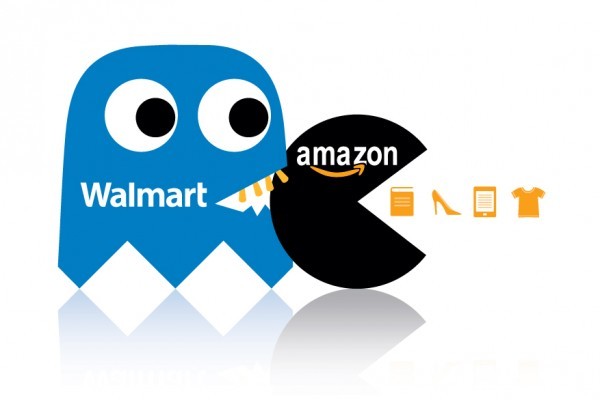
The Next Amazon is Next Door...
Let's examine the Mission Statements of both Amazon and WalMart, using marketing management ideas - specifically insights on strategies, goals, technology, sourcing, and orientation.
Amazon is Market-Oriented
The world’s fourth largest marketing platform is currently Amazon.com (Markman, 2017). Their Mission Statement is
“To be Earth’s most customer-centric company, where customers can find and discover anything they might want to buy online, and endeavors to offer its customers the lowest possible prices,”
which clearly outlines their valuable purpose for customers and a forward-looking strategy to achieve a goal of low pricing.
Amazon is likely market-oriented, rather than product-, production-, or futuristically oriented. Product-orientation implies that Amazon mainly creates products itself, which it does not (Business Case Studies, 2019). Mainly, Amazon offers a multitude of products for sale, sourced through a multitude of vendors; there are a relatively small quantity of products made by Amazon itself (Amazon Branded), sold as substitutes for other vendors’ products, when their inventories are empty, fake, or problematic (Edelman, 2019).
Amazon Branded products are usually at a higher price than other vendors that sell through Amazon, so Amazon is unlikely to be production-oriented (Quain, 2018). Likewise, despite the inclusion of the forward-looking words “...endeavors to offer…” in their Mission Statement, Amazon’s mission statement is not futuristic, since it accurately describes Amazon today.As implied in Amazon’s Mission Statement, Amazon is strongly market-oriented to “...be Earth’s most customer-centric company...discover anything they might want [at] the lowest possible prices.” Amazon organizes its activities, products, and services around its customers wants and needs (Business Case Studies, 2019), with over 600 million products (Johnson, 2018).

Opinion: Update the Real Canadian Superstore and WalMart’s Mission Statement to Compete with Amazon
WalMart’s Mission Statement has been reviewed and updated over the years; previously, it was “We deliver low prices, every day;” currently, WalMart’s Mission Statement is “to save people money so they can live better.” Because of internal and external factors relevant to marketing, NOW may be the best time to review and update the Mission Statement for both the Real Canadian Superstore and WalMart, based on consumer experiences.
From our shopping experiences, most people buy almost exactly the same products from a local retail location, every week. Neither the Real Canadian Superstore nor WalMart have done much capitalize on consumer shopping habits, other than keeping it’s doors open late into the night.

Both the Real Canadian Superstore and WalMart have sufficient internal qualities to rival that of Amazon, such that these retailers can take advantage of external qualities, given today’s popularity of one-to-one marketing. WalMart’s goal of “saving money” is a good one, but needs to be updated similar to what they had used previously as a Mission Statement. Perhaps something along the lines of
“We deliver what you need to live better, every day at low prices!”
Mostly Strengths and Few Weaknesses
Internally, both the Real Canadian Superstore and WalMart already have the technology and processes to surpass Amazon:
online ordering, telephone ordering, delivery to homes, and pick-up from any of their local retail locations; if consumers can't wait for a scheduled delivery, they can simply walk-in and buy from any of their locations.
WalMart ought to utilize their advantage of the worldwide ‘big data’ that they have, and push buying recommendations to consumers, so that we can have our usual purchases delivered regularly; likewise, the Real Canadian Superstore can do the same, within Canada.
They can both offer supplemental products that consumers might not know they wanted, but do want... like Amazon does (Wills, 2018). Though the Real Canadian Superstore and WalMart have lower profit margins than other vendors, this can be overcome by increasing sales volume through 'recommendations' mitigated by their 'big data.'
Opportunities and Threats
With the popularity of home delivery services, retailers can capitalize on a few aspects: products can be marketed and delivered to remote locations; more hiring can be done to expedite analytics and deliveries; and overall product quality can improve by more accurately eliminating under-performing products, while pushing recommended products (Smithson, 2019).
Unfortunately, because consumers and retailers have already realized that the next Amazon may be 'around the corner,' other retailers have started heavy competitions in the retail/big data/delivery space, according to Investopedia (Segal, 2020).
Summary
Both the Real Canadian Superstore and WalMart need to proactively push regular home deliveries / pick-up of products that consumers buy habitually, capitalizing on it's 'big data' to “deliver what we need to live better, every week, at low prices,” as soon as possible to win against Amazon. Updating its Mission Statement would be a first step to increase its sales volume, profitability, and regularly satisfy its loyal base of customers.
References
Markman, J. (2017). The Amazon Era: No Profits, No Problem. Forbes. Retrieved from https://www.forbes.com/sites/jonmarkman/2017/05/23/the-amazon-era-no-profits-no-problem/#251a7eed437a
Business Case Studies, (2019). Market-and-product-orientation. Retrieved from https://businesscasestudies.co.u/market-and-product-orientation/Edelman, G. (2019). Amazon Doesn’t Favor Its Own Brands—Except When It Does. Wired. Retrieved from https://www.wired.com/story/amazon-gating-private-labels-antitrust/
Segal, T. (2020). Who Are Amazon's (AMZN) Main Competitors? Company Profiles. Retrieved from https://www.investopedia.com/ask/answers/120314/who-are-amazons-amzn-main-competitors.asp
Smithson, N. (2019). Walmart SWOT Analysis & Recommendations. Panmore Institute. Retrieved from http://panmore.com/walmart-swot-analysis-recommendations-case-study
Wills, J. (2018). 7 Ways Amazon Uses Big Data to Stalk You (AMZN). Cybersecurity. Retrieved from https://www.investopedia.com/articles/insights/090716/7-ways-amazon-uses-big-data-stalk-you-amzn.asp
Quain, S. (2018). Difference Between Product Orientation and Production Orientation. Houston Chronicle. Retrieved from https://smallbusiness.chron.com/difference-between-product-orientation-production-orientation-16004.html
Subscribe to:
Posts (Atom)


