

I just wanted to provide some more detail to my previous explanation of what communications are encrypted on a BlackBerry. This issue has caused quite a bit of confusion recently so I thought I would clear it up specifically for BlackBerry Messenger and PIN messages.
BlackBerry Messenger and PIN to PIN messages are NOT encrypted. They are scrambled using a global cryptographic key which EVERY BlackBerry in the world uses. BES administrators have the option to encrypt the body of PIN messages (but not the PIN itself) using a organization specific encryption key but that limits users to only be able to send PIN messages within the organization so it is usually not done. It is possible to use the S/MIME Package RIM sells to encrypt PIN to PIN messages but that gets complicated and is really only done by Government organizations.
There are a couple of problems with PIN to PIN messaging that is also the basis of BlackBerry messenger that you should know about. The Communications Security Establishment in Canada was kind enough to detail some of these issues:
As said before PIN to PIN messages by default are NOT encrypted they are scrambled using a cryptographic key
If an wireless carrier or government manages to reroute your PIN message to any other BlackBerry in the world by changing the header then it will be readable on that device
Devices cannot be reused by another person since messages for that PIN will continue to come to the device for the original owner. Think of it this way. If you sell your BlackBerry the new owner will get your PIN messages. The sender would also have no idea that this is the case.
You have no idea if the person sending you that PIN message has not sold their device or had it stolen by another person who is impersonating them.
Even if an organization uses their BES with a organization specific PIN key the PIN number is still not encrypted and sent in the clear. That means a snoop could see who is sending messages back and forth.
Saturday


FAQ: BlackBerry Messenger & PIN Messages are NOT Encrypted
I just wanted to provide some more detail to my previous explanation of what communications are encrypted on a BlackBerry. This issue has caused quite a bit of confusion recently so I thought I would clear it up specifically for BlackBerry Messenger and PIN messages.
BlackBerry Messenger and PIN to PIN messages are NOT encrypted. They are scrambled using a global cryptographic key which EVERY BlackBerry in the world uses. BES administrators have the option to encrypt the body of PIN messages (but not the PIN itself) using a organization specific encryption key but that limits users to only be able to send PIN messages within the organization so it is usually not done. It is possible to use the S/MIME Package RIM sells to encrypt PIN to PIN messages but that gets complicated and is really only done by Government organizations.
There are a couple of problems with PIN to PIN messaging that is also the basis of BlackBerry messenger that you should know about. The Communications Security Establishment in Canada was kind enough to detail some of these issues:
As said before PIN to PIN messages by default are NOT encrypted they are scrambled using a cryptographic key
If an wireless carrier or government manages to reroute your PIN message to any other BlackBerry in the world by changing the header then it will be readable on that device
Devices cannot be reused by another person since messages for that PIN will continue to come to the device for the original owner. Think of it this way. If you sell your BlackBerry the new owner will get your PIN messages. The sender would also have no idea that this is the case.
You have no idea if the person sending you that PIN message has not sold their device or had it stolen by another person who is impersonating them.
Even if an organization uses their BES with a organization specific PIN key the PIN number is still not encrypted and sent in the clear. That means a snoop could see who is sending messages back and forth.
BlackBerry Messenger and PIN to PIN messages are NOT encrypted. They are scrambled using a global cryptographic key which EVERY BlackBerry in the world uses. BES administrators have the option to encrypt the body of PIN messages (but not the PIN itself) using a organization specific encryption key but that limits users to only be able to send PIN messages within the organization so it is usually not done. It is possible to use the S/MIME Package RIM sells to encrypt PIN to PIN messages but that gets complicated and is really only done by Government organizations.
There are a couple of problems with PIN to PIN messaging that is also the basis of BlackBerry messenger that you should know about. The Communications Security Establishment in Canada was kind enough to detail some of these issues:
As said before PIN to PIN messages by default are NOT encrypted they are scrambled using a cryptographic key
If an wireless carrier or government manages to reroute your PIN message to any other BlackBerry in the world by changing the header then it will be readable on that device
Devices cannot be reused by another person since messages for that PIN will continue to come to the device for the original owner. Think of it this way. If you sell your BlackBerry the new owner will get your PIN messages. The sender would also have no idea that this is the case.
You have no idea if the person sending you that PIN message has not sold their device or had it stolen by another person who is impersonating them.
Even if an organization uses their BES with a organization specific PIN key the PIN number is still not encrypted and sent in the clear. That means a snoop could see who is sending messages back and forth.

E-LEARNING - Philosophy of whether to design a new program, and how to manage development...
Why does an e-learning course deserve to exist?
http://www.youtube.com/watch?v=Mj5M4KCfTwo

How to manage the development of a new course
in seven easy steps.
http://www.youtube.com/watch?v=WURExEwxU2M

http://www.youtube.com/watch?v=Mj5M4KCfTwo
How to manage the development of a new course
in seven easy steps.
http://www.youtube.com/watch?v=WURExEwxU2M
Tuesday


Sunday


Wednesday
Investopedia Article - Dissecting Declarations, Ex-Dividends And Record Dates
| Dissecting Declarations, Ex-Dividends And Record Dates at http://www.investopedia.com/articles/02/110802.asp Investopedia is your complete, unbiased, and easy-to-understand educational guide to investing and personal finance. The site has the biggest financial dictionary on the web, hundreds of articles and tutorials, and an investing simulator where you can practice managing a portfolio without putting your money at risk. |
Investopedia Article - Dissecting Declarations, Ex-Dividends And Record Dates
| Dissecting Declarations, Ex-Dividends And Record Dates
at http://www.investopedia.com/articles/02/110802.asp Investopedia is your complete, unbiased, and easy-to-understand educational guide to investing and personal finance. The site has the biggest financial dictionary on the web, hundreds of articles and tutorials, and an investing simulator where you can practice managing a portfolio without putting your money at risk. |
Thursday
WORK LIKE BATMAN
Do you have a pile of work to do from your home office, a "white collar" desk job, or need to complete long hours of data entry (it is tax season now)?
WATCH YOUR POSTURE, ROBIN!
Most of the time...stand up while you work! This burns more calories, gives you more energy in general, and makes you sound better on phone calls!

WATCH YOUR POSTURE, ROBIN!
Most of the time...stand up while you work! This burns more calories, gives you more energy in general, and makes you sound better on phone calls!
The line about posture is out of the Dark Knight Returns book from Frank Miller.
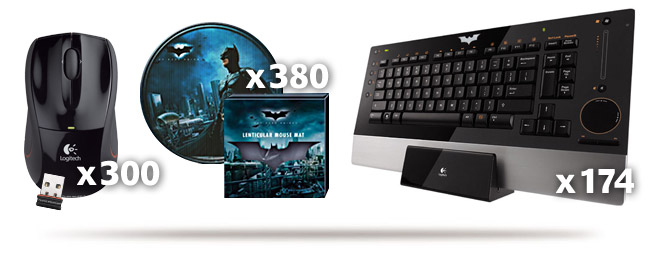
TO THE BAT COMPUTER!
Get a sweet (sweeet) keyboard and mouse combination...it is the most used part of your computer, right?
There are multitudes of ergonomic designs from companies like Microsoft.
I prefer the wireless, rechargable, orange-glow-in-the-dark Divino variety from Logitech,
especially when it looks sleek, uses secure Bluetooth technology, and can be branded with a minimalist Bat logo.
Recently, Logitech launched a contest for some nifty prizes ala Dark Knight.
Swag!

CAPE AND COWL
Keep a neutrally-coloured blazer or jacket at your desk; dark beige, dark, blue, or grey seem to work well for most people. Layers of professional clothing are a nice (successful) way to handle temperature changes throughout the day within an air conditioned office, right?
Keep your clothes in shape by avoiding those 1960's "Bat Poles"...
Wednesday


Saturday
QUOTATIONS FROM THE FAST AND FRIENDLY CLOUDS!
Feel free to use some TANTALIZING QUOTES related to Twitter and Google for spicing-up your speeches, discussions, and board (bored?) meetings...

From Vogelstein writing in Wired magazine, August 2009:
Eric Schmidt, one of the founders of Google, repeatedly reminds his employees that Microsoft could crush Google at any moment. To wit:
Here's a couple from Jarvis in his What Would Google Do? book:
What Would Google Do?:
We're enjoying the multitudes of free web applications that are being developed nowadays to "just work," with the software vendor getting out of the way.

From Vogelstein writing in Wired magazine, August 2009:
“Google is big. Very big. Its millions of servers process about 1 petabyte of user-generated data every [60 minutes]...bigness is the very point of Google...its competitive advantage-is its ability to find meaning in massive sets of data. The larger the data sets, the more potential meaning can be derived...”By the by, one petabyte (PiB) is equal to 1,125,899,906,842,624 bytes (B), and each standard byte contains eight bits (ones and/or zeros). Impressive, isn’t it?

Eric Schmidt, one of the founders of Google, repeatedly reminds his employees that Microsoft could crush Google at any moment. To wit:
“...because Microsoft is a follower, there is a concern that it could use its Windows monopoly to restrict choices”
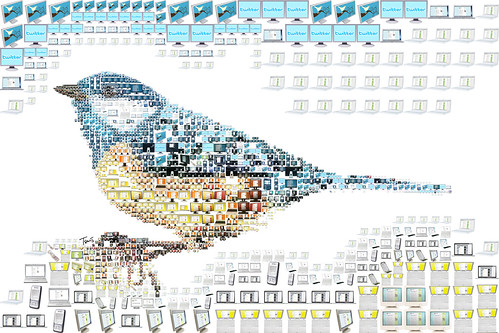
Here's a couple from Jarvis in his What Would Google Do? book:
Note that back then, the Twitter service was only 600 days old – this is a reflection of the significantly swift adoption rate that y'all have for web services that “just work” connect you with your friends and family.“When China’s Sichuan Province suffered its horrendous earthquake in May 2008, people who felt it firsthand shared their experience via Twitter...people in the quake zone would use Twitter to update friends...If I were going through a quake, I’d want to tell family and friends that I was safe, wouldn’t you?”

What Would Google Do?:
“...those of us that teach students in rapidly changing arenas...must get better at keeping up with – no, getting ahead of – our students, industry, and society.”

We're standing on the shoulders of Giants, right?

We're enjoying the multitudes of free web applications that are being developed nowadays to "just work," with the software vendor getting out of the way.
How do some of the newer, smaller, web vendors that "give away" free online services pay their employees, though?
The Web 2.0 conundrum...
Any brilliant ideas about this?
I keep hoping that this Golden (Google?) Age of developing free "just work" web applications lasts for a while.
If not, change will be brutally and significantly swift, too.
Talk about these ideas soon, eh?
QUOTATIONS FROM THE FAST AND FRIENDLY CLOUDS!
Feel free to use some TANTALIZING QUOTES related to Twitter and Google for spicing-up your speeches, discussions, and board (bored?) meetings...

Here's a couple from Jarvis in his What Would Google Do? book:
We're enjoying the multitudes of free web applications that are being developed nowadays to "just work," with the software vendor getting out of the way.
From Vogelstein writing in Wired magazine, August 2009:
“Google is big. Very big. Its millions of servers process about 1 petabyte of user-generated data every [60 minutes]...bigness is the very point of Google...its competitive advantage-is its ability to find meaning in massive sets of data. The larger the data sets, the more potential meaning can be derived...”By the by, one petabyte (PiB) is equal to 1,125,899,906,842,624 bytes (B), and each standard byte contains eight bits (ones and/or zeros). Impressive, isn’t it?
Eric Schmidt, one of the founders of Google, repeatedly reminds his employees that Microsoft could crush Google at any moment. To wit:
“...because Microsoft is a follower, there is a concern that it could use its Windows monopoly to restrict choices”
Note that back then, the Twitter service was only 600 days old – this is a reflection of the significantly swift adoption rate that y'all have for web services that “just work” connect you with your friends and family. What Would Google Do?:“When China’s Sichuan Province suffered its horrendous earthquake in May 2008, people who felt it firsthand shared their experience via Twitter...people in the quake zone would use Twitter to update friends...If I were going through a quake, I’d want to tell family and friends that I was safe, wouldn’t you?”
“...those of us that teach students in rapidly changing arenas...must get better at keeping up with – no, getting ahead of – our students, industry, and society.”
We're standing on the shoulders of Giants, right?
We're enjoying the multitudes of free web applications that are being developed nowadays to "just work," with the software vendor getting out of the way.
How do some of the newer, smaller, web vendors that "give away" free online services pay their employees, though? The Web 2.0 conundrum... Any brilliant ideas about this?
I keep hoping that this Golden (Google?) Age of developing free "just work" web applications lasts for a while.
If not, change will be brutally and significantly swift, too.
Talk about these ideas soon, eh?
Wednesday


WHY AIR MILES ARE NEEDED FOR WEB 2.0
Before Web 2.0 evolved, the concept of "Customer loyalty" was pervasive in the software industry (E.g. "we've only ever used Microsoft Outlook for CRM").

In many people's view, this was the result of a combination of factors including the following:
companies were able to come up with competitive products that were
able to quickly pull "loyal" customers away from the giants. Some of the advantages are as follows:
functionality, terminology, and marketing from other companies
extremely easily...(e.g. compare the glaring similarities between American Basecamp and the European iTeamwork, for
instance).
In the current environment then, with high exportability of data
records, think about how easy it would be for you to buy one software
title...
use it for a while and then say "nah, there's something better over here..."
....and quickly change vendors
(e.g. people that used Evite from Yahoo now use
Facebook for event management;
Australian Diigo quietly took over Furl for online management of bookmarks;
Delicious is contending with Yahoo and Google Toolbar for bookmarks)!
Did Web 2.0 move us into a world of low customer loyalty, copycat
features everywhere, and high migration?

How do Web 2.0 vendors retain customers? To ponder...

In many people's view, this was the result of a combination of factors including the following:
- steep prices for software, making it prohibitive to buy from another vendor
- unique "killer" features of one title over another
- investment of intensive staff training, and costs of subsequent re-training
companies were able to come up with competitive products that were
able to quickly pull "loyal" customers away from the giants. Some of the advantages are as follows:
- low fees for software
- streamlined features to get the job done
- easy-to-learn minimal staff training
functionality, terminology, and marketing from other companies
extremely easily...(e.g. compare the glaring similarities between American Basecamp and the European iTeamwork, for
instance).
In the current environment then, with high exportability of data
records, think about how easy it would be for you to buy one software
title...
use it for a while and then say "nah, there's something better over here..."
....and quickly change vendors
(e.g. people that used Evite from Yahoo now use
Facebook for event management;
Australian Diigo quietly took over Furl for online management of bookmarks;
Delicious is contending with Yahoo and Google Toolbar for bookmarks)!
Did Web 2.0 move us into a world of low customer loyalty, copycat
features everywhere, and high migration?
For instance, there are sooo many vendors for free (and almost free) Web 2.0 software for
task management lists, todo lists, and sticky note applications,
that it boggles the mind which one to choose.
Most sane people likely just "go with the marketing flow."
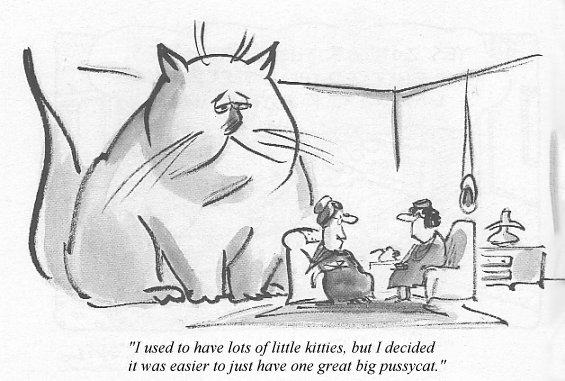
How do Web 2.0 vendors retain customers? To ponder...
- "Air miles" point / discount programs to make customers reluctant about switching vendors?
- How comfortable are you with the vendor's business philosophy - are you in-tune?
- With more organizations from your industry using the same application, there may be more apt support for your specific needs, right?
- Do you keep buying more and more disparate mini applications, or just get one giant application that is much more robust?
Subscribe to:
Posts (Atom)


