your originating ip address

Showing posts with label internet. Show all posts

Saturday

QUOTATIONS FROM THE FAST AND FRIENDLY CLOUDS!

Feel free to use some TANTALIZING QUOTES related to Twitter and Google for spicing-up your speeches, discussions, and board (bored?) meetings...


From Vogelstein writing in Wired magazine, August 2009:
“Google is big. Very big. Its millions of servers process about 1 petabyte of user-generated data every [60 minutes]...bigness is the very point of Google...its competitive advantage-is its ability to find meaning in massive sets of data. The larger the data sets, the more potential meaning can be derived...”

By the by, one petabyte (PiB) is equal to 1,125,899,906,842,624 bytes (B), and each standard byte contains eight bits (ones and/or zeros). Impressive, isn’t it?

Eric Schmidt, one of the founders of Google, repeatedly reminds his employees that Microsoft could crush Google at any moment. To wit:
“...because Microsoft is a follower, there is a concern that it could use its Windows monopoly to restrict choices”
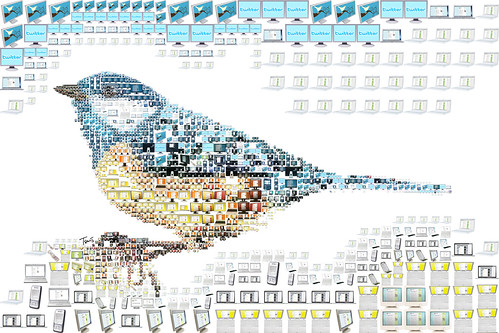
Here's a couple from Jarvis in his What Would Google Do? book:
“When China’s Sichuan Province suffered its horrendous earthquake in May 2008, people who felt it firsthand shared their experience via Twitter...people in the quake zone would use Twitter to update friends...If I were going through a quake, I’d want to tell family and friends that I was safe, wouldn’t you?”

Note that back then, the Twitter service was only 600 days old – this is a reflection of the significantly swift adoption rate that y'all have for web services that “just work” connect you with your friends and family.

What Would Google Do?:
“...those of us that teach students in rapidly changing arenas...must get better at keeping up with – no, getting ahead of – our students, industry, and society.”


We're standing on the shoulders of Giants, right?


We're enjoying the multitudes of free web applications that are being developed nowadays to "just work," with the software vendor getting out of the way.
How do some of the newer, smaller, web vendors that "give away" free online services pay their employees, though?
The Web 2.0 conundrum...
Any brilliant ideas about this?
I keep hoping that this Golden (Google?) Age of developing free "just work" web applications lasts for a while.

If not, change will be brutally and significantly swift, too.

Talk about these ideas soon, eh?

thanks from ifranks

QUOTATIONS FROM THE FAST AND FRIENDLY CLOUDS!

Feel free to use some TANTALIZING QUOTES related to Twitter and Google for spicing-up your speeches, discussions, and board (bored?) meetings... 


From Vogelstein writing in Wired magazine, August 2009:
“Google is big. Very big. Its millions of servers process about 1 petabyte of user-generated data every [60 minutes]...bigness is the very point of Google...its competitive advantage-is its ability to find meaning in massive sets of data. The larger the data sets, the more potential meaning can be derived...”
By the by, one petabyte (PiB) is equal to 1,125,899,906,842,624 bytes (B), and each standard byte contains eight bits (ones and/or zeros). Impressive, isn’t it?
Eric Schmidt, one of the founders of Google, repeatedly reminds his employees that Microsoft could crush Google at any moment. To wit:
“...because Microsoft is a follower, there is a concern that it could use its Windows monopoly to restrict choices”
Here's a couple from Jarvis in his What Would Google Do? book:
“When China’s Sichuan Province suffered its horrendous earthquake in May 2008, people who felt it firsthand shared their experience via Twitter...people in the quake zone would use Twitter to update friends...If I were going through a quake, I’d want to tell family and friends that I was safe, wouldn’t you?”
Note that back then, the Twitter service was only 600 days old – this is a reflection of the significantly swift adoption rate that y'all have for web services that “just work” connect you with your friends and family. What Would Google Do?:
“...those of us that teach students in rapidly changing arenas...must get better at keeping up with – no, getting ahead of – our students, industry, and society.”
We're standing on the shoulders of Giants, right?
We're enjoying the multitudes of free web applications that are being developed nowadays to "just work," with the software vendor getting out of the way.
How do some of the newer, smaller, web vendors that "give away" free online services pay their employees, though? The Web 2.0 conundrum... Any brilliant ideas about this?
I keep hoping that this Golden (Google?) Age of developing free "just work" web applications lasts for a while.
If not, change will be brutally and significantly swift, too.
Talk about these ideas soon, eh?
thanks from ifranks

Wednesday

MULTIPLE FLAVOURS OF CERTIFICATION

The lifelong CIU certification recently developed at IRM is specifically geared towards a software application that manages associations and non-profit organizations.


There are more generalized certifications for training professionals that can work hand-in-hand with virtually any software system. A few examples are as follows:


INSTRUCTIONAL SKILLS WORKSHOP (ISW) PROGRAM

The Instructional Skills Workshop (ISW) Program is a comprehensive three-tiered instructor development program that serves as the foundation for several professional development activities.

The second tier is the University Teaching Certificate (UTC) Program.


CERTIFIED TRAINING AND DEVELOPMENT PROFESSIONAL

Obtaining a CSTD designation demonstrates you have a thorough understanding of the common body of knowledge of our profession. Both the Certified Training and Development Professional (CTDP) and the Certified Training Practitioner (CTP) designations are based on the competency categories outlined in the Training Competency Architecture, commonly called the 'TCA", a common body of knowledge for the training and development profession.


certificate for anti-terrorism training


TECHNICAL TRAINER CERTIFICATION


Individual trainers may pursue certification of their skills as a trainer. Applicants who are full members in good standing and have successfully completed the Advanced Train the Trainer seminar may apply to be certified as a Professional Technical Trainer (PTT) for a period of three years. Members may apply for recertification. The PTT certification is valid only for full members in good standing.


keep training concise


TAP LEARNING SYSTEM

The Training Foundation is dedicated to enhancing the status of L&D practitioners to that of genuine Professionals. True professions demand a credible Qualifications Framework and continuous professional development. As a career trainer, you may feel that traditional certificates in training practice, often achieved many years ago, may not reflect the full range of practical skills you need in today's fast-moving L&D world.


thanks from ifranks

MULTIPLE FLAVOURS OF CERTIFICATION

The lifelong CIU certification recently developed at IRM is specifically geared towards a software application that manages associations and non-profit organizations.


There are more generalized certifications for training professionals that can work hand-in-hand with virtually any software system. A few examples are as follows:


INSTRUCTIONAL SKILLS WORKSHOP (ISW) PROGRAM
The Instructional Skills Workshop (ISW) Program is a comprehensive three-tiered instructor development program that serves as the foundation for several professional development activities.
The second tier is the University Teaching Certificate (UTC) Program.


CERTIFIED TRAINING AND DEVELOPMENT PROFESSIONAL
Obtaining a CSTD designation demonstrates you have a thorough understanding of the common body of knowledge of our profession. Both the Certified Training and Development Professional (CTDP) and the Certified Training Practitioner (CTP) designations are based on the competency categories outlined in the Training Competency Architecture, commonly called the 'TCA", a common body of knowledge for the training and development profession.

certificate for anti-terrorism training

TECHNICAL TRAINER CERTIFICATION

Individual trainers may pursue certification of their skills as a trainer. Applicants who are full members in good standing and have successfully completed the Advanced Train the Trainer seminar may apply to be certified as a Professional Technical Trainer (PTT) for a period of three years. Members may apply for recertification. The PTT certification is valid only for full members in good standing.

keep training concise

TAP LEARNING SYSTEM
The Training Foundation is dedicated to enhancing the status of L&D practitioners to that of genuine Professionals. True professions demand a credible Qualifications Framework and continuous professional development. As a career trainer, you may feel that traditional certificates in training practice, often achieved many years ago, may not reflect the full range of practical skills you need in today's fast-moving L&D world.


thanks from ifranks

Tuesday

BOOKMARKS - WORK ANYWHERE NOW!

1) ASSUMPTION
Major software applications that you need to get your work done are already, or soon will be, in the online cloud; all you will need is the right URL, username, and password to "get to work."

social networking

2) THE WAY WE WORK NOW
People are getting their work done in offices, at homes, and en route because laptop computers, fully-featured mobile phones with browsers, and public computer kiosks are ubiquitous.

3) A TINY TOOL BECOMES A HUGE LEVER
We can "work anywhere" with the right URL, username, and password.
Thus our URLs, usually kept as favourites or bookmarks in our favourite (favorite) internet browser, become the first stepping stone to reach our "work anywhere" office.


bookmark bookmarks

FREE SOLUTIONS...
DEL.ICIO.US
Challenging to add new bookmarks with mobile phone browsers because the functionality of "Submit" buttons need to be simplified.

Well developed bookmarks that can be made public for social networking (i.e. how many other people using Delicious have bookmarked the same URL that I added).
Mobile phone browsers can log-in and use existing bookmarks.
Owned by Yahoo.

YAHOO BOOKMARKS
As of this writing, still very Beta with low search ability.

Good import ability.

DIIGO
Challenging to add new bookmarks with mobile phone browsers because the functionality of "Submit" buttons need to be simplified.
Challenging exportability because Tag details are lost.
Delayed updates to large quantities of bookmarks due to reindexing.

Well developed bookmarks that can be made public for social networking (i.e. what are other people using Diigo saying about the same URL that I added).
Mobile phone browsers can log-in and use existing bookmarks.
Previous views of websites are stored in cache, which is useful for defunct pages.
Based in Australia, and new owners of Furl.

favorite favorites

GOOGLE BOOKMARKS (my choice)
Rushed development, but it works
(e.g. the Google Cart logo appears in older versions of Internet Explorer,
the Add and other functions appear at the bottom, after scrolling through your entire list of Labels).
Bookmarks are private, without social quantifiers nor caching.

Good search ability (of course).
Can add new links with mobile phone browsers because of simplified "Submit" button.
Good exportability.

TAKE HOME MESSAGE
Move your bookmarks and favorites out of your current browsers (i.e. home computer, work computer, and mobile phone) and import them into an all-in-one online bookmarking tool.
This will merge your collection of URLs, centralize access to them, and help you to truly "work from anywhere."


thanks from ifranks

BOOKMARKS - WORK ANYWHERE NOW!

1) ASSUMPTION
Major software applications that you need to get your work done are already, or soon will be, in the online cloud; all you will need is the right URL, username, and password to "get to work."

social networking

2) THE WAY WE WORK NOW
People are getting their work done in offices, at homes, and en route because laptop computers, fully-featured mobile phones with browsers, and public computer kiosks are ubiquitous.

3) A TINY TOOL BECOMES A HUGE LEVER
We can "work anywhere" with the right URL, username, and password.
Thus our URLs, usually kept as favourites or bookmarks in our favourite (favorite) internet browser, become the first stepping stone to reach our "work anywhere" office.


bookmark bookmarks

FREE SOLUTIONS...
DEL.ICIO.US
Challenging to add new bookmarks with mobile phone browsers because the functionality of "Submit" buttons need to be simplified.

Well developed bookmarks that can be made public for social networking (i.e. how many other people using Delicious have bookmarked the same URL that I added).
Mobile phone browsers can log-in and use existing bookmarks.
Owned by Yahoo.

YAHOO BOOKMARKS
As of this writing, still very Beta with low search ability.

Good import ability.

DIIGO
Challenging to add new bookmarks with mobile phone browsers because the functionality of "Submit" buttons need to be simplified.
Challenging exportability because Tag details are lost.
Delayed updates to large quantities of bookmarks due to reindexing.

Well developed bookmarks that can be made public for social networking (i.e. what are other people using Diigo saying about the same URL that I added).
Mobile phone browsers can log-in and use existing bookmarks.
Previous views of websites are stored in cache, which is useful for defunct pages.
Based in Australia, and new owners of Furl.

favorite favorites

GOOGLE BOOKMARKS (my choice)
Rushed development, but it works
(e.g. the Google Cart logo appears in older versions of Internet Explorer,
the Add and other functions appear at the bottom, after scrolling through your entire list of Labels).
Bookmarks are private, without social quantifiers nor caching.

Good search ability (of course).
Can add new links with mobile phone browsers because of simplified "Submit" button.
Good exportability.

TAKE HOME MESSAGE
Move your bookmarks and favorites out of your current browsers (i.e. home computer, work computer, and mobile phone) and import them into an all-in-one online bookmarking tool.
This will merge your collection of URLs, centralize access to them, and help you to truly "work from anywhere."


thanks from ifranks

Thursday

LEARN ONLINE, GET CHALLENGED, AND ADD VALUE!

I've been a member of TrainingZone for several years, and they seem to have more mature insights on the training profession, perhaps because the UK has advanced differently than Canada.
Below are a few helpful articles from 2008.

BIG PICTURE IDEAS ABOUT LEARNING ONLINE
Is e-learning just a mass-market delivery mechanism that offers the prospect of cutting per person training costs? What lessons have been learnt from its use? And how is its use changing and its value being assessed?

online e learning webct elearning logo

ATTENDEES THAT CHALLENGE YOU
How do you manage new employees who criticize your training methods, complain to senior staff and take the induction into their own hands? What training strategies will win back control and keep it?

keep profits high in training ventures by increasing sales and decreasing costs

REDUCE THE EXPENSE OF NO-SHOWS

How do you count the cost of no-shows to training? There seems little in the way of hard facts, but what we do know is they cost money - and lots of it.

thanks from ifranks

LEARN ONLINE, GET CHALLENGED, AND ADD VALUE!

I've been a member of TrainingZone for several years, and they seem to have more mature insights on the training profession, perhaps because the UK has advanced differently than Canada.
Below are a few helpful articles from 2008.

BIG PICTURE IDEAS ABOUT LEARNING ONLINE
Is e-learning just a mass-market delivery mechanism that offers the prospect of cutting per person training costs? What lessons have been learnt from its use? And how is its use changing and its value being assessed?

online e learning webct elearning logo

ATTENDEES THAT CHALLENGE YOU
How do you manage new employees who criticize your training methods, complain to senior staff and take the induction into their own hands? What training strategies will win back control and keep it?

keep profits high in training ventures by increasing sales and decreasing costs

REDUCE THE EXPENSE OF NO-SHOWS

How do you count the cost of no-shows to training? There seems little in the way of hard facts, but what we do know is they cost money - and lots of it.

thanks from ifranks

Monday

EVEN EGYPTIAN GODS HAVE KNOW-HOW FOR WEB 2.0?

Alan Moore wrote Watchmen, V for Vendetta, and thought-provoking short stories for DC comics. Have a look at him in the middle of a other cartoon characters in the Simpsons, below:


Quote from a fellow named MYSTICO in Moore's Terra Obscura:
"They were drowning in data, but almost bereft of knowledge....and of wisdom they knew nothing."
This definitely describes the plethora of web-based opportunities available in "the cloud" of information available nowadays.

The data that was previously stored in hard drives is now "in the cloud," which poses a different set of security challenges; improving security of web-based software is the cost - the benefit of having data available anywhere / anytime.

Alluding to the above quote, the data stream ("knowledge") flowing to your browser is only as safe as the standard features ("wisdom") implemented by the vendor.


What are some of the features that might be important? Think about the following:

SECURE: It's brilliant that many of the free vendors are including HTTPS options for their software applications - Gmail is one popular example. Though it may slow-down the performance of retrieving the data, security is crucial for some people's information, which might include CRM data, financial details, and communication logs.
Let's follow Gmail's example and at least have the option available, eh?

SHARE: The application ought to be open and usable by other applications, through a current API / online standard format. It's messy out there with all of the different options running around, so making data available to standard online tools is essential.
For instance,
integration with iCal/Outlook calendars,
strong searchability,
and comma-delimited import/exportability is nice, isn't it?


STABILITY: Free is great, but what happens if the vendor gets subsumed by another vendor, or simply closes business forever? If you examine the Legal Agreement that most people click-past, most free vendors simply state that "if we close our doors, your data is toast, and we aren't responsible"...!
Pay for an web-based system that is redundantly backed-up every day for 30-60 days, with the back-up significantly away from its operating servers, and an iron-clad 99.9999% (six nines) guarantee of "up time."
thanks from ifranks

EVEN EGYPTIAN GODS HAVE KNOW-HOW FOR WEB 2.0?

Alan Moore wrote Watchmen, V for Vendetta, and thought-provoking short stories for DC comics. Have a look at him in the middle of a other cartoon characters in the Simpsons, below:


Quote from a fellow named MYSTICO in Moore's Terra Obscura:
"They were drowning in data, but almost bereft of knowledge....and of wisdom they knew nothing."
This definitely describes the plethora of web-based opportunities available in "the cloud" of information available nowadays.

The data that was previously stored in hard drives is now "in the cloud," which poses a different set of security challenges; improving security of web-based software is the cost - the benefit of having data available anywhere / anytime.

Alluding to the above quote, the data stream ("knowledge") flowing to your browser is only as safe as the standard features ("wisdom") implemented by the vendor.


What are some of the features that might be important? Think about the following:

SECURE: It's brilliant that many of the free vendors are including HTTPS options for their software applications - Gmail is one popular example. Though it may slow-down the performance of retrieving the data, security is crucial for some people's information, which might include CRM data, financial details, and communication logs.
Let's follow Gmail's example and at least have the option available, eh?

SHARE: The application ought to be open and usable by other applications, through a current API / online standard format. It's messy out there with all of the different options running around, so making data available to standard online tools is essential.
For instance,
integration with iCal/Outlook calendars,
strong searchability,
and comma-delimited import/exportability is nice, isn't it?


STABILITY: Free is great, but what happens if the vendor gets subsumed by another vendor, or simply closes business forever? If you examine the Legal Agreement that most people click-past, most free vendors simply state that "if we close our doors, your data is toast, and we aren't responsible"...!
Pay for an web-based system that is redundantly backed-up every day for 30-60 days, with the back-up significantly away from its operating servers, and an iron-clad 99.9999% (six nines) guarantee of "up time."
thanks from ifranks

More...